
Last updated November 23, 2026
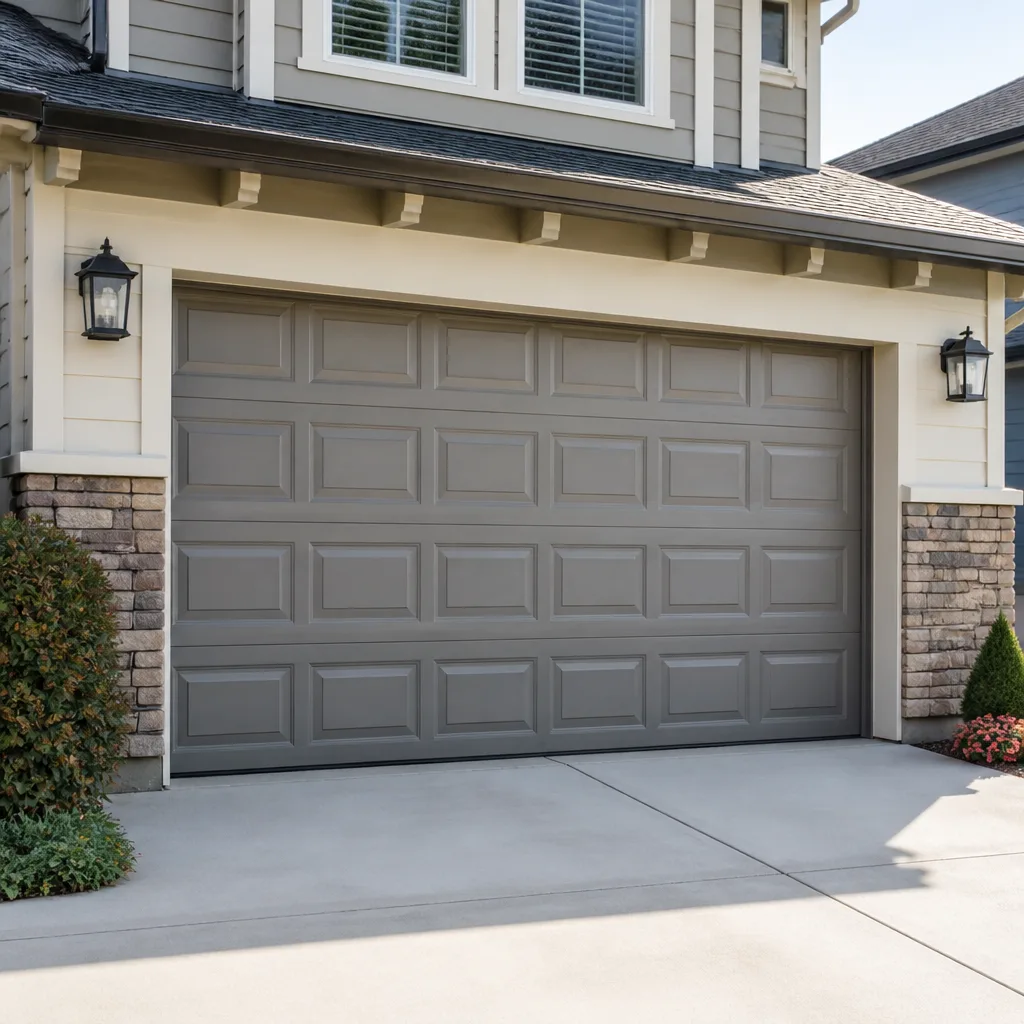 Raised-panel steel
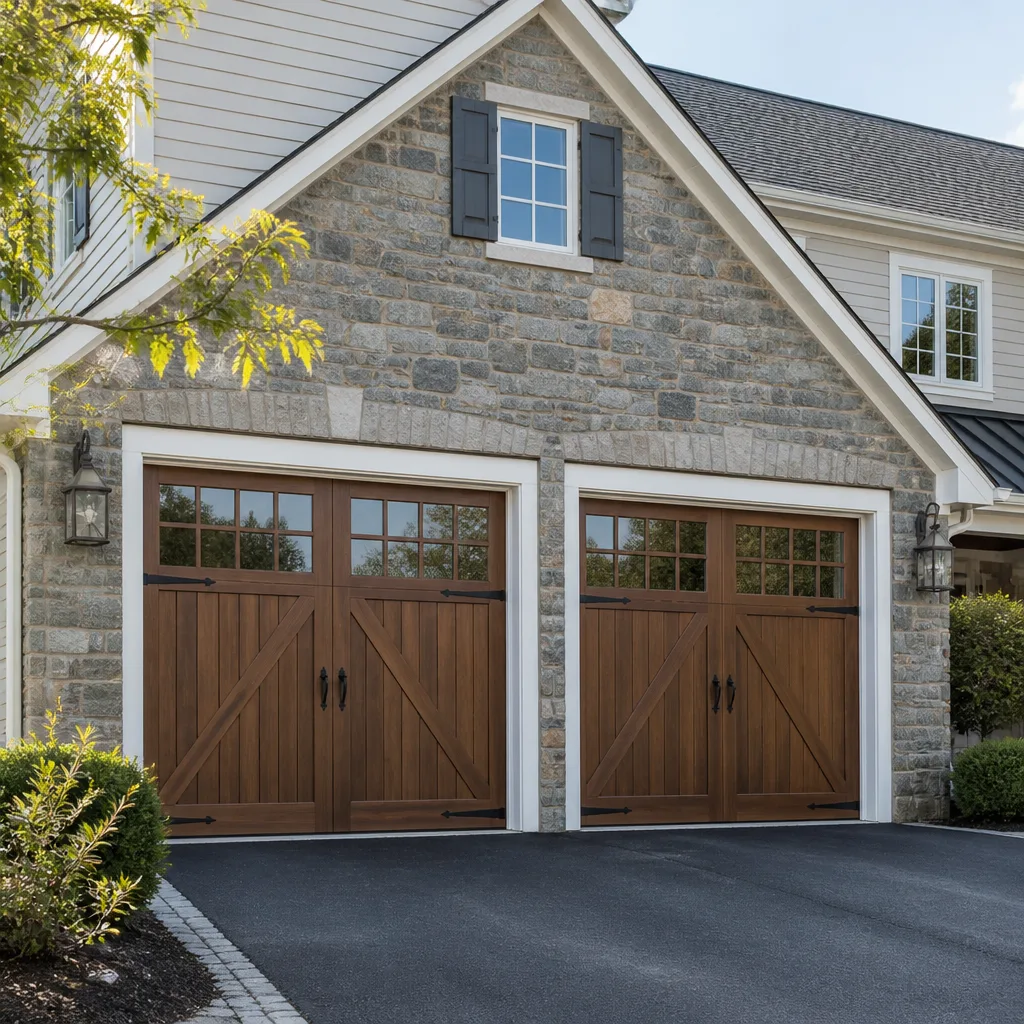 Carriage house
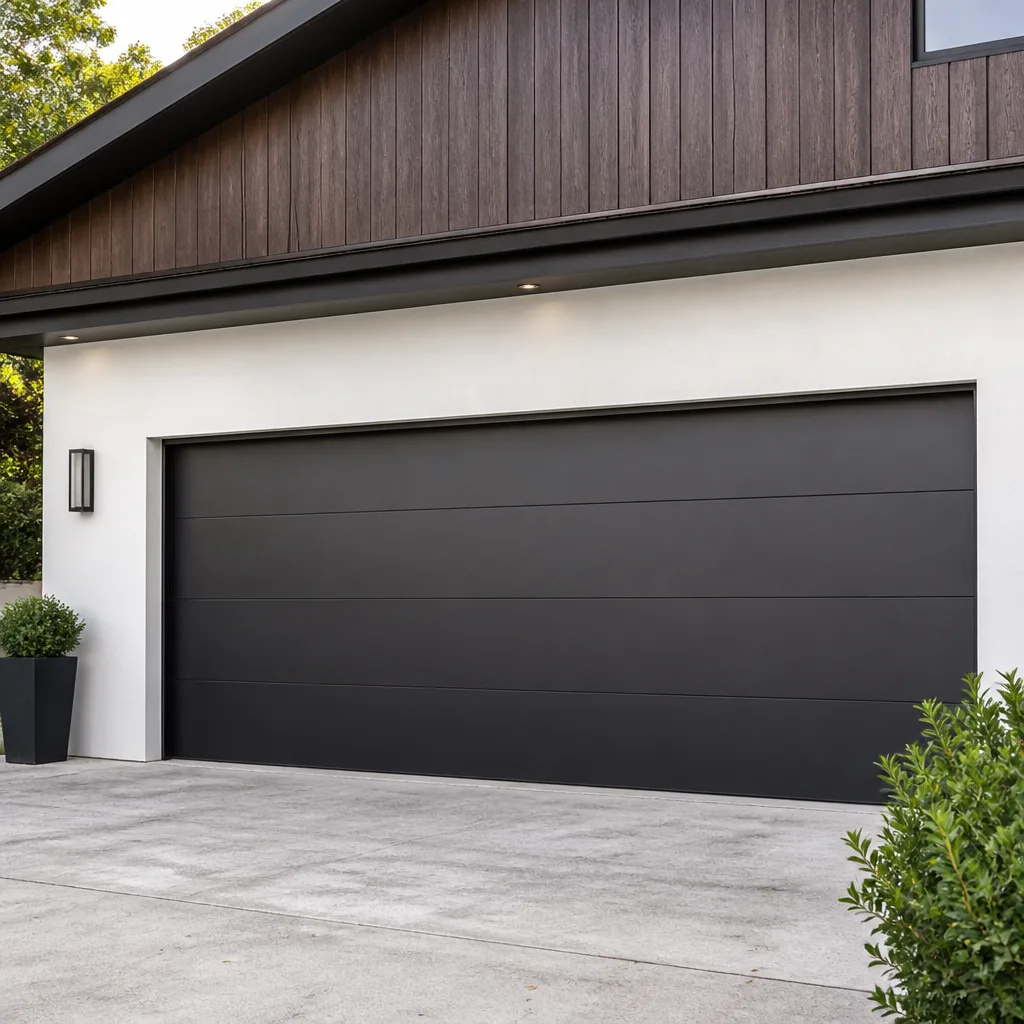 Modern flush
 Full-view glass
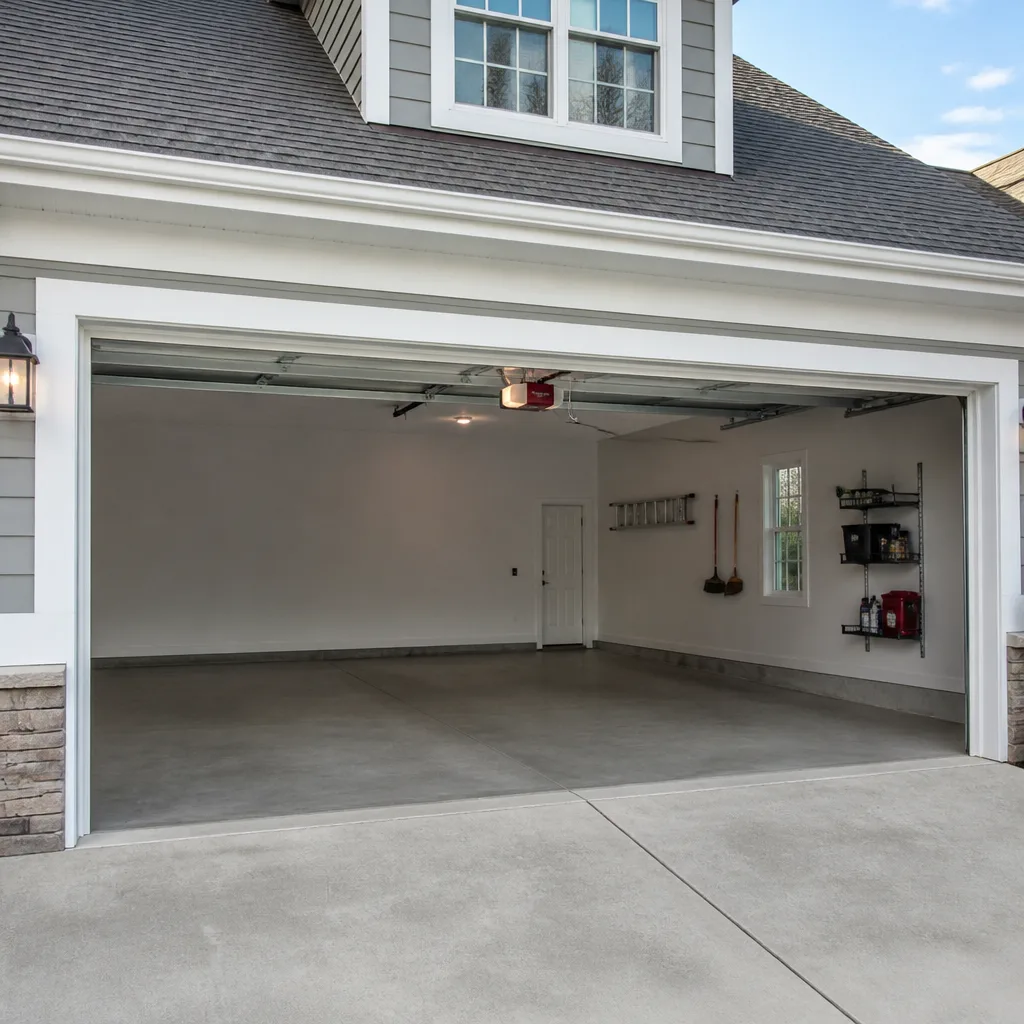 LiftMaster openers
 Chamberlain openers
Full 25-point door and opener safety check with every visit - springs, cables, rollers, tracks, and your LiftMaster or Chamberlain opener included
You get a price before we start. It does not change when the pro arrives.
Get your free estimateDIY vs Professional Garage Door: The Petersburg Homeowner’s Decision Guide
Most articles about garage door repair answer the wrong question. They treat DIY versus professional as a matter of confidence or budget, as if a determined homeowner with a Saturday and a YouTube tab can do anything a technician can. That framing is comfortable and it’s misleading. The real question is narrower and more useful: which specific garage door tasks reward a homeowner’s hands, and which ones don’t care how careful you are? A few jobs are genuinely easy. A few are genuinely dangerous no matter your skill level. In this Petersburg guide, we map the trade task by task so you know exactly where the line sits.
Quick Answer
You can safely handle garage door lubrication, safety sensor alignment, bottom seal replacement and roller swaps yourself. You should not touch torsion springs, cables or track realignment – those involve stored mechanical energy and a loaded system that can injure you even when you do everything right. Everything else falls in between, and the smart move is usually a free professional estimate to sort it out.
Styles & brands we work with
- Raised-panel steel
- Carriage house
- Modern flush
- Full-view glass
- LiftMaster openers
- Chamberlain openers
Table of Contents
- Why Springs Are a Physics Problem, Not a Difficulty Problem
- The Task-by-Task DIY vs Professional Matrix
- Three Tasks You Can Do Yourself (With Real Instructions)
- The Jobs a Professional Should Always Handle
- What DIY Mistakes Actually Cost You
- How to Prepare Before a Technician Arrives
- Sourcing Parts in Petersburg: What’s Local, What’s Online
- Warranty and Insurance Implications of DIY Work
Why Springs Are a Physics Problem, Not a Difficulty Problem
A fully wound torsion spring stores a large amount of mechanical energy – enough that when it releases unexpectedly, it does so with force and speed that no reaction time can absorb. This is the reason the “can I replace it myself?” question has a different answer than almost every other home repair. It’s not about whether you’re handy or brave or methodical. It’s about whether you can safely manage a component that is actively trying to unwind.
We work on garage door spring repair constantly, and our technicians will tell you the same thing: the springs are the one part of your door system that punish inexperience without warning. The torsion bar, winding cones and set screws must be held under precise control during the swap. If you release tension incorrectly, the bar can spin violently or the spring can snap toward you. That’s not a hypothetical; it’s the standard outcome when the process goes wrong, and it doesn’t depend on your skill level going in.
There’s a second physics problem too. A torsion spring is matched to the door’s weight and height. Put in a spring rated for the wrong load, and the door will balance wrong – which stresses the opener, the hinges and the panels. The door may run for a while and then wear prematurely. On a Petersburg home where the door is a primary entry point, that’s an expensive detour.
So here’s the honest framing: springs are dangerous, and this is a job for a trained technician. Not a confident homeowner. A trained one who knows the physics and has the winding bars to hold it safely. If your spring has snapped and the door won’t lift, that’s an emergency – call us and we can get you back on track today.
The Task-by-Task DIY vs Professional Matrix
The most useful thing we can hand you is a clear line. Here’s how we break down the common garage door tasks in a Petersburg home:
Tasks That Are DIY-Appropriate
- Lubrication – the single easiest, most impactful maintenance task. You can do it in fifteen minutes.
- Safety sensor alignment – the photo-eye sensors at the bottom of the tracks. Adjusting them is safe and straightforward.
- Bottom seal replacement – a rubber or vinyl weather seal that slides or nails into the bottom section. Simple pop-out, pop-in.
- Roller swap – the small wheels that run in the track. Removing and replacing them is manageable when the door is properly supported.
- Cleaning and visual inspection – checking for worn hinges, loose bolts, and rust spots on the tracks.
Tasks That Require a Professional
- Torsion and extension spring replacement – stored energy risk. No exceptions.
- Cable replacement or repair – cables are under tension and can cut or crush a hand.
- Track realignment – a bent or shifted track changes the door’s geometry, and forcing it can send panels off the rail.
- Opener motor and logic board repair – more than a swap; wiring, calibration and safety reverse test are all required.
- Panel replacement and full door installation – weight, balance and spring matching all need to line up.
- Anything that requires lifting the door weight manually or removing a spring’s tension.
Notice the pattern: if it’s touching tension or moving a heavy door off its normal path, it’s a pro job. If it’s a fixed, low-load component you can access without the door above your head, you can likely do it. In our experience, that single rule resolves 90% of the DIY-or-not question in a Petersburg garage.
Three Tasks You Can Do Yourself (With Real Instructions)
We’re not going to gatekeep the easy stuff. If you’re comfortable on a step stool and can follow a procedure, these are yours to do. What we won’t do is walk you step-by-step through spring work – that’s where safety has to win out over instructions.
1. Lubrication
- Close the door so the springs and hinges are relaxed.
- Use a garage-door-specific lubricant (not WD-40 or cooking spray) and apply a light coat to each hinge pivot, the roller stems and the torsion spring coils.
- Wipe off excess so grit doesn’t collect. Run the door up and down once to distribute.
- Repeat roughly twice a year – more often if you’re in a dusty or high-use zone.
2. Safety Sensor Alignment
- Look at both sensor lights. Each should glow steady, not blink.
- If one blinks, loosen its mounting bracket slightly and slide it until the light goes steady.
- Tighten the bracket and verify by passing a hand or a small object in front of the beam – the door should reverse immediately.
- If the light never stays steady, the sensor itself may be failing, which is a garage door repair call.
3. Bottom Seal Replacement
- Pull the old seal out of the bottom retainer – it usually slides out of a T-slot or pulls free from the track.
- Measure the door width and buy a matching seal. Bring the old one to the store if you can.
- Slide the new seal into the retainer from one end, or nail/screw it along the section if yours is a nail-on style.
- Test the door’s full up and down travel to make sure the seal doesn’t catch on anything.
The roller swap is the fourth task, and it’s doable if the door is fully open and you’re replacing one roller at a time with the door supported. But if the door won’t stay up on its own, stop – that’s a sign of a balance problem, and the rollers aren’t the real issue.
The Jobs a Professional Should Always Handle
There’s a reason we treat these as a hard stop. Each one involves energy, tension or the geometric alignment of a door that weighs hundreds of pounds. Doing it wrong doesn’t just cost a repair – it can hurt you.
Cable Work
The lift cables run under high tension and hold the door’s weight. When a cable frays or snaps, the door can drop or twist. Replacing a cable means releasing the cable tension, swapping the part and re-tensioning correctly, all while keeping the door controlled. That’s a two-person, trained job.
Track Realignment
A track that’s been bumped by a car or pulled out of plumb will force the door into a bind. The track itself is a light piece of steel, but the geometry it imposes is unforgiving. A slight wrong angle causes the rollers to bind and the panels to jump. A professional checks the whole door’s parallel and repositions the track – and often finds the real problem isn’t the track at all but a bent hinge or a failing roller.
Opener Repair and Smart-Home Openers
We work on garage door opener repair every week, and the openers on Petersburg homes span the full range: standard LiftMaster, Chamberlain (with the myQ ecosystem), Genie and Craftsman units, and the newer Wi-Fi-integrated models. Each brand has its own logic for calibration, travel limits and safety-reverse testing. A homeowner can clear a jammed travel limit once, but a logic board issue, a bad capacitor or a homing sensor that’s drifted is a diagnostic problem. That’s a Petersburg Garage Door Repair Pros specialty.
Spring Replacement
We’ve covered the physics above. This is the one where we won’t equivocate: the correct answer to “can I replace my own spring?” is no.
Panel and Full Door Replacement
Panels are heavy, they must match the door’s weight and balance, and a new door needs matched spring tension from the first lift. On the brand side, we service and install Clopay, Amarr, Wayne Dalton and Craftsman doors, among others – and getting the original panel specs right matters to the fit. That work is measured, ordered and scheduled, not a same-day swap.
What DIY Mistakes Actually Cost You
We’re not going to scare you with a disaster story. But real, specific repair costs follow from the most common DIY errors, and a homeowner benefits from knowing them before picking up a tool.
The most common mistake is forcing a door that won’t open smoothly. Usually the door binds, the homeowner keeps running the opener, and the opener’s gear or logic board gives out. An opener repair for a stripped gear or a burned board is a real bill, and it was caused by a door that just needed a roller or alignment adjustment before the opener stressed it.
The second mistake is trying to adjust a spring’s tension without the right tools. The most common outcome is a bent winding cone or a damaged torsion bar, not a hospital visit – but the spring is now in worse shape than when you started. The third is replacing a bottom seal with the wrong profile, which lets water and grit in and eventually damages the bottom section of the door. The fourth is mis-seating a roller, which wears the track and leads to a track realignment call. The fifth is disconnecting the opener’s safety reverse because it “kept going off” – that’s a dangerous assumption about why the door reverses, and the answer is usually a sensor or alignment issue.
None of these are catastrophic. But each one converts a small fix into a bigger one, and that’s the real cost of DIY: not the injury rate, but the escalation. A free estimate from a specialist usually stays cheaper than the repair chain you can accidentally start.
How to Prepare Before a Technician Arrives
The billable time on a service call is often diagnostic time, and you can reduce it. Here’s a short prep checklist that helps any technician – and it’s especially useful for the emergency calls where minutes count.
- Note the brand and model of your opener, if you can see it. The sticker is usually on the back of the motor housing. “LiftMaster” or “Chamberlain” tells us the ecosystem; the exact model tells us the logic.
- Write down what happens when you press the remote: does the door start and stop? Click with no movement? Move halfway? Does the light flash? That single sentence is worth five minutes of diagnosis.
- Check the breaker if the opener is completely dead. A tripped breaker is the easiest fix there is, and we’d rather find it first thing.
- Clear the floor area in front of and behind the door, and move the car out of the way if possible.
- Have the door in its current position – don’t try to force it closed or open before the technician arrives. A stuck-open door is safer left where it is.
- Write your question down, if you have one. People forget the thing they meant to ask once the technician is in front of them.
For a Petersburg homeowner facing an emergency, call us first. We answer 24/7, and we can dispatch a technician with fast dispatch from 7am to 7pm, Sunday through Friday. If your call comes outside those hours, we’ll book you into the next opening. You don’t need to talk to voicemail – we pick up.
Sourcing Parts in Petersburg: What’s Local, What’s Online
For the DIY-friendly tasks, parts are easy to source. Bottom seals, rollers, hinges and lubricant are all available at most home improvement stores. The trick is matching the profile – bring the old part with you if you can, because a bottom seal that “looks close” often isn’t.
Rollers are a common mismatch too. The nylon roller and the steel roller are not interchangeable in the same application – a steel roller on a residential door can wear the track prematurely. Check your existing roller’s material before buying.
For openers and springs, the sourcing question is different. Springs are matched to the door’s weight and height, and a spring rated for the wrong door will run wrong even if it installs. We don’t recommend buying a spring online and installing it yourself – that’s the one part where the specification has to be exact. Opener logic boards and sensors are usually an exact-model match, and a universal remote often won’t program correctly against newer LiftMaster and Chamberlain units because those systems have moved to the myQ ecosystem.
Wayne Dalton and Craftsman doors sometimes have panels and track parts that aren’t stocked locally – they have to be ordered to the door’s model. That’s where the timeline gets real: a panel replacement isn’t same-day work, and a new door needs a free measure and a written price before anything is ordered.
Warranty and Insurance Implications of DIY Work
There’s a practical consequence of DIY work that rarely gets discussed: what it does to a warranty from an earlier repair. If a professional replaced your spring or opener and the part is still under a workmanship guarantee, opening the housing or adjusting the spring yourself can void that coverage. The same goes for a manufacturer’s warranty on an opener – the sticker usually requires installation or repair by a qualified technician to remain valid.
On the insurance side, the general principle is straightforward: a homeowner policy usually covers sudden accidental damage, but it can decline a claim where clearly negligent work caused the damage. That’s not the same as “DIY voids your insurance” – it’s not that dramatic. But if a spring you installed yourself lets go and damages the door, or an opener you wired incorrectly causes an electrical issue, the coverage conversation becomes harder. That’s a risk you’re choosing, at the point you choose to do the job.
For most Petersburg homeowners, the tradeoff is about access to the guarantee. A repair we perform carries our workmanship, and the local professional is licensed and insured as their state requires. That’s what you’re buying, along with the knowledge that the job was done right the first time.
Common Mistakes to Avoid
- Forcing a door that binds. The stretch-and-jerky motion is the door telling you to stop. Forcing it stresses the opener and accelerates the breakdown.
- Adjusting spring tension with the door in the wrong position. Springs should only be worked on by a technician with the door in a controlled, correct state. A homeowner adjusting tension “just a little” is the most common route to a bent torsion bar.
- Using the wrong lubricant. WD-40 and cooking spray attract dust and gum up the hinges. Use a door-specific lubricant, and don’t over-apply.
- Replacing a bottom seal with the wrong profile. A seal that doesn’t fit the retainer lets in water and grit, which damages the bottom section over time.
- Ignoring a safety reverse failure. If your door doesn’t reverse when something crosses the beam, that’s a real safety problem. Don’t assume it will fix itself.
- Buying a spring online for a DIY install. Springs are matched to the door weight and height. A wrong-rated spring is worse than a snapped one because it can run without obvious symptoms and wear out the opener.
- Relying on a general handyman for a spring or opener issue. A handyman who doesn’t work on garage doors all day is guessing at the brand logic. The specialists at Petersburg Garage Door Repair Pros work with the eight major brands – LiftMaster, Chamberlain, Genie, Clopay, Amarr, Wayne Dalton, Craftsman and Raynor – and that knowledge is the difference between a correct fix and a callback.
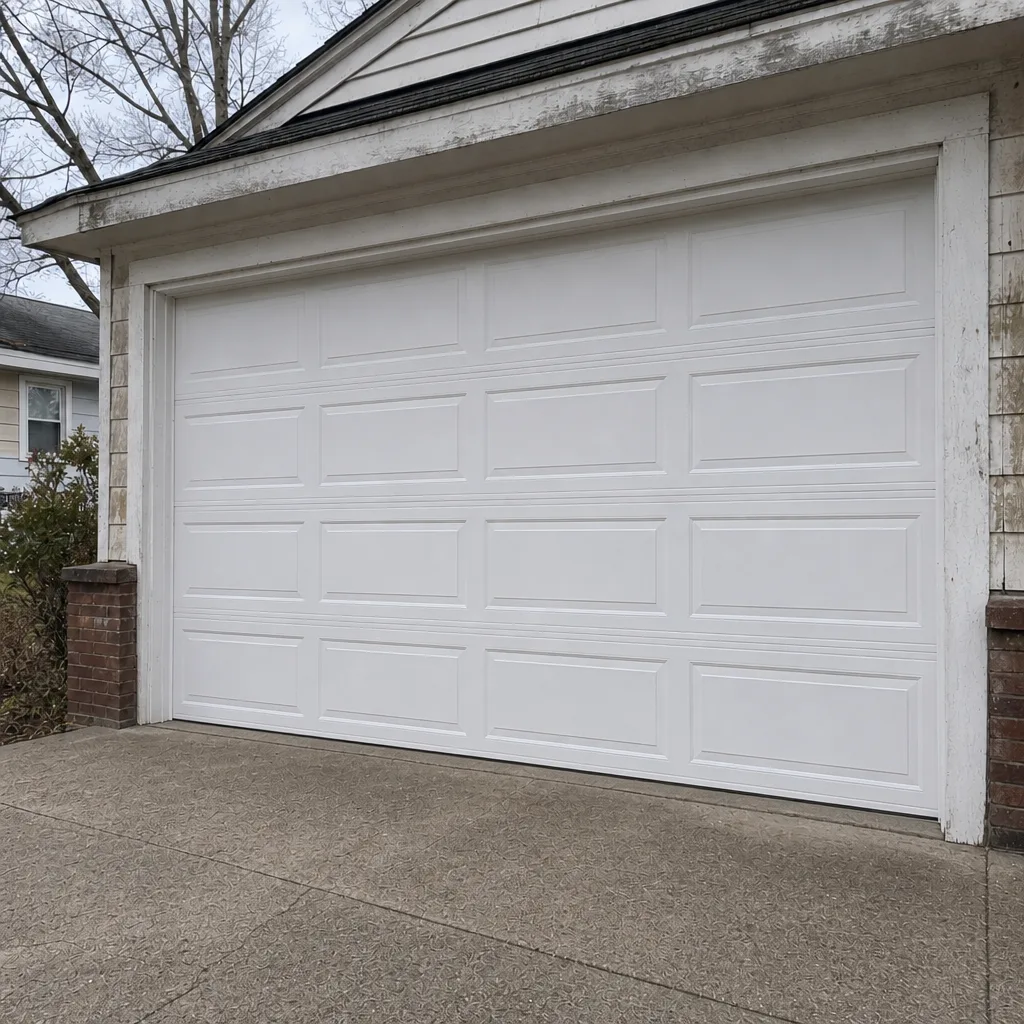
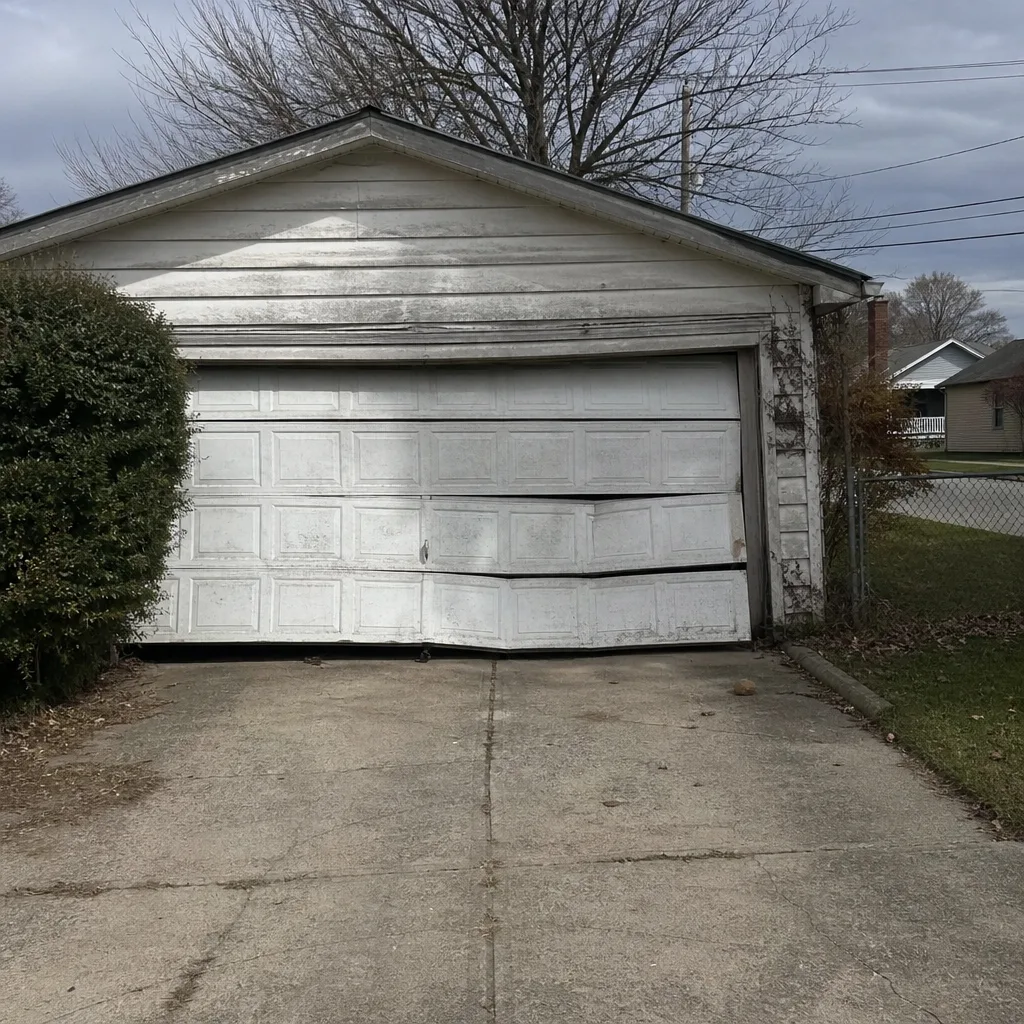
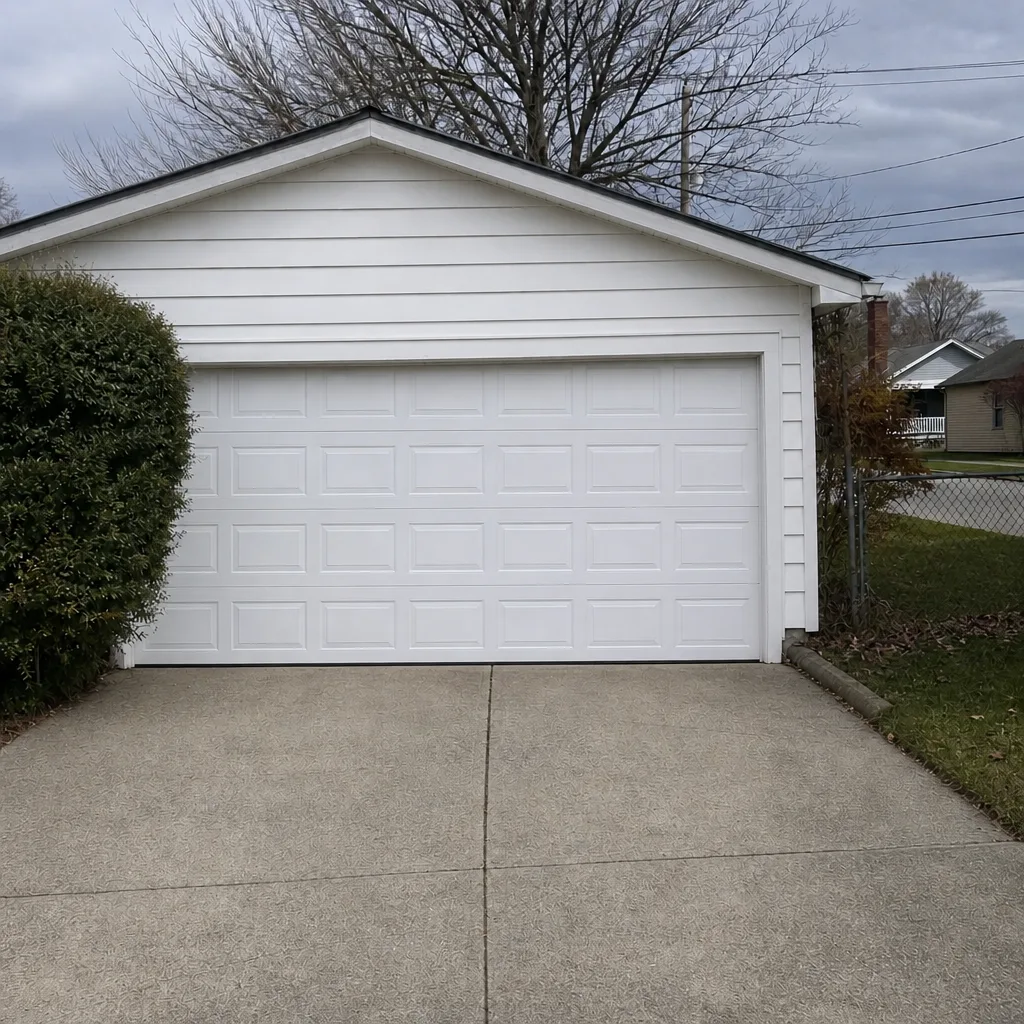
See the difference
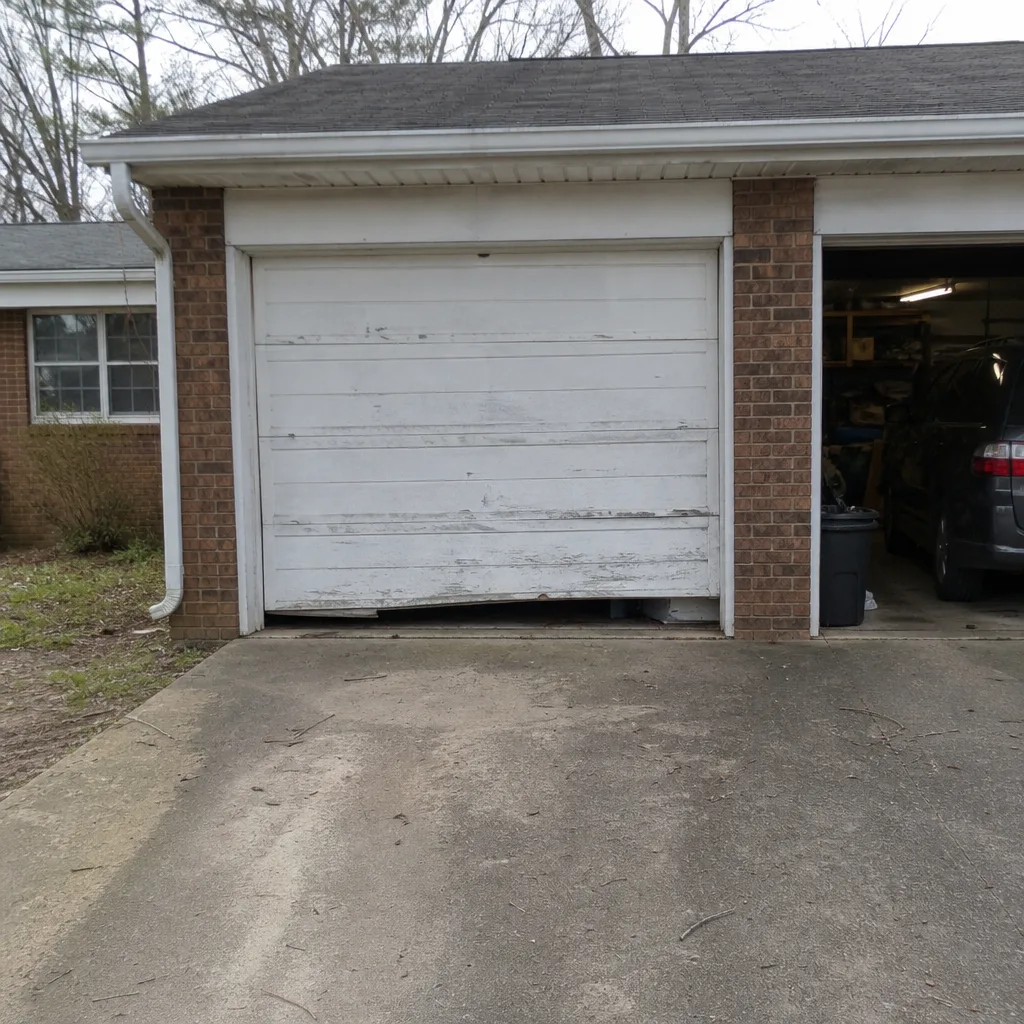 Before
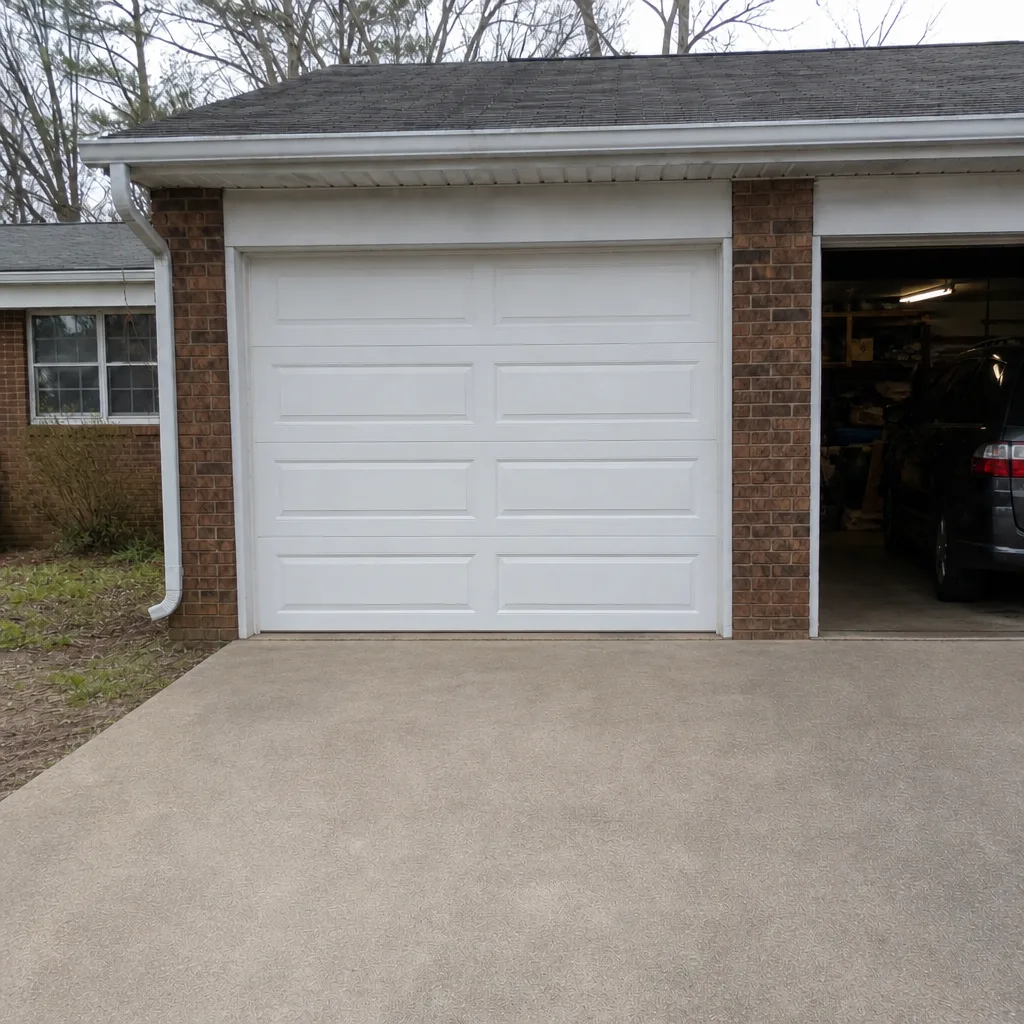 After
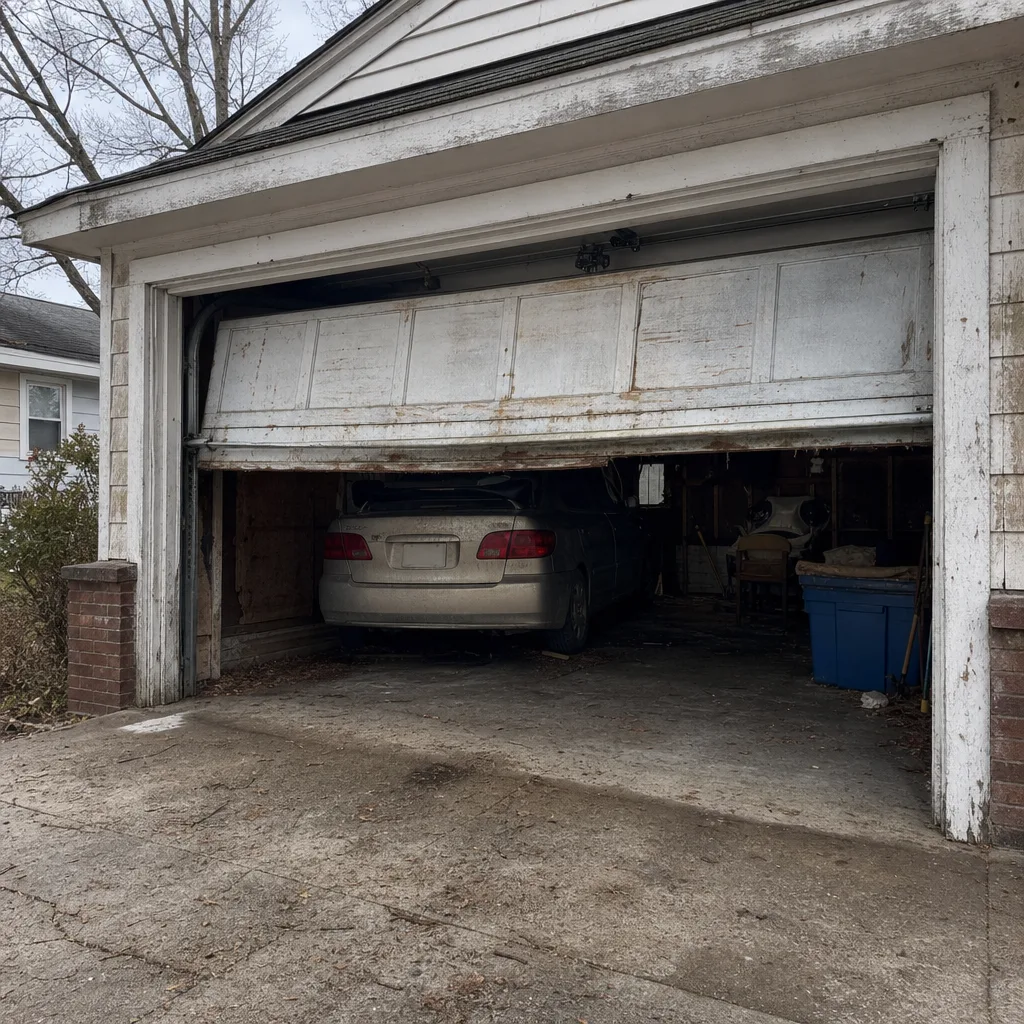 Before
 After
 Before
 After
When to Call a Professional
Call a professional immediately when: a spring has snapped and the door won’t lift, the door is stuck open or won’t close, a cable has frayed or come off the drum, the door is off its track, the opener is dead or the safety reverse has failed. Those are all situations where the risk of delayed or wrong repair outweighs the cost of a service call. For less urgent work – a noisy door, a slow opener, a worn bottom seal, a door that needs new panels – call for a free estimate and a written price before any work starts. We can work with your insurer if a repair involves covered damage. Petersburg Garage Door Repair Pros offers free estimates in Petersburg and handles the full arc from emergency response to new door installation, so you don’t have to find a second company when the job gets bigger. Call (844) 791-5308. We answer 24/7. Fast dispatch from 7am to 7pm, Sunday through Friday.
Frequently Asked Questions
Lubrication, safety sensor alignment, bottom seal replacement and roller swaps are the tasks a homeowner can typically handle. These jobs involve low-tension components you can access without the door above your head. Anything touching springs, cables, the track alignment or the opener’s internal logic belongs with a technician.
No. A fully wound torsion spring stores significant energy, and releasing it incorrectly can cause serious injury regardless of your skill level. The spring is also matched to your door’s weight and height, so an incorrect install causes premature wear even if it seems to work. Call a specialist – spring repair is a named specialty at Petersburg Garage Door Repair Pros, and it’s the right call.
It’s an emergency if the door is stuck open or won’t close, a spring has snapped, a cable is loose or off the drum, or the door is off its track. Those situations leave the home exposed or risk further damage. A noisy door or a slow opener is not an emergency and can wait for a scheduled estimate. Call (844) 791-5308 for the urgent cases – we answer 24/7.
No. The written estimate is the price, and it’s agreed before any work starts. The estimate is free and the price is set per job, so you know the number before we begin. If your diagnosis differs from what we expected, we’ll talk it through with you and re-quote before touching the door.
Yes. The local professional we connect you with is licensed and insured as their state requires. For high-tension spring work, that licensing matters more than usual – it’s a safety-critical job and should only be handled by someone trained to do it correctly.
We answer 24/7, so call and we’ll help. We’re closed on Saturdays for dispatch, but we’ll book you into the next opening, Sunday through Friday, 7am to 7pm. Leave the door where it is if you can; forcing a stuck door risks more damage. Call (844) 791-5308 and we’ll get you sorted.
The Bottom Line
The DIY versus professional question isn’t a philosophy of self-reliance. It’s a task-by-task map, and the map in this Petersburg guide is simple: if you’re touching low-tension components like sensors, seals and rollers, you’re fine. If you’re touching springs, cables, track alignment or opener logic, you’re not. The most common mistake isn’t a dramatic injury – it’s a small fix that turns into a bigger one because the door was forced. The smart move is to know where the line sits, prepare well for the tasks you take on, and call for a free estimate when you’re not sure which side of the line you’re on. We’d rather answer a quick question than fix a mistake – that’s the whole point of a specialist. Call us for a free estimate and a clear, written price before any work starts.
Ready to get your door sorted? Petersburg Garage Door Repair Pros handles repair, opener work, spring replacement and full new installation across Petersburg. Call (844) 791-5308 for a free estimate. We answer 24/7. Fast dispatch from 7am to 7pm, Sunday through Friday.
Written by the team at Petersburg Garage Door Repair Pros.