
Last updated November 23, 2026
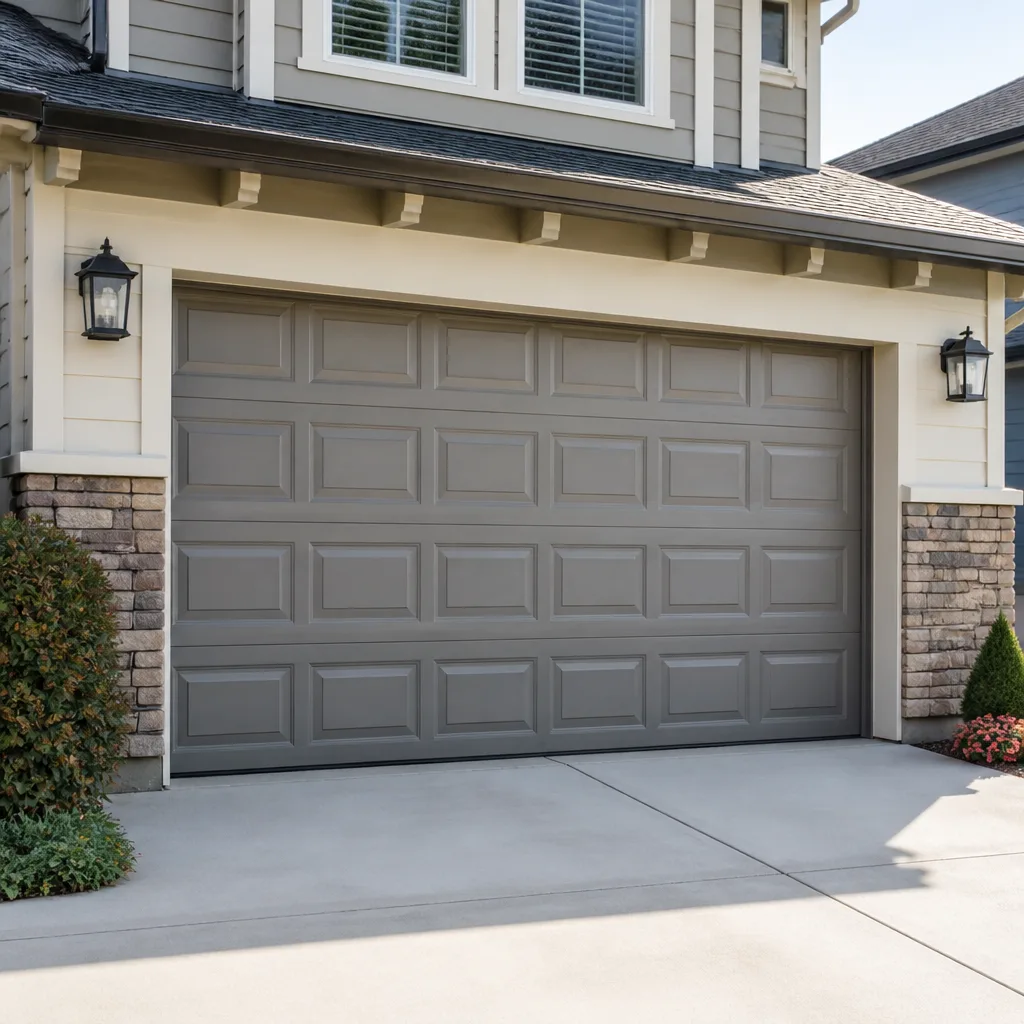 Raised-panel steel
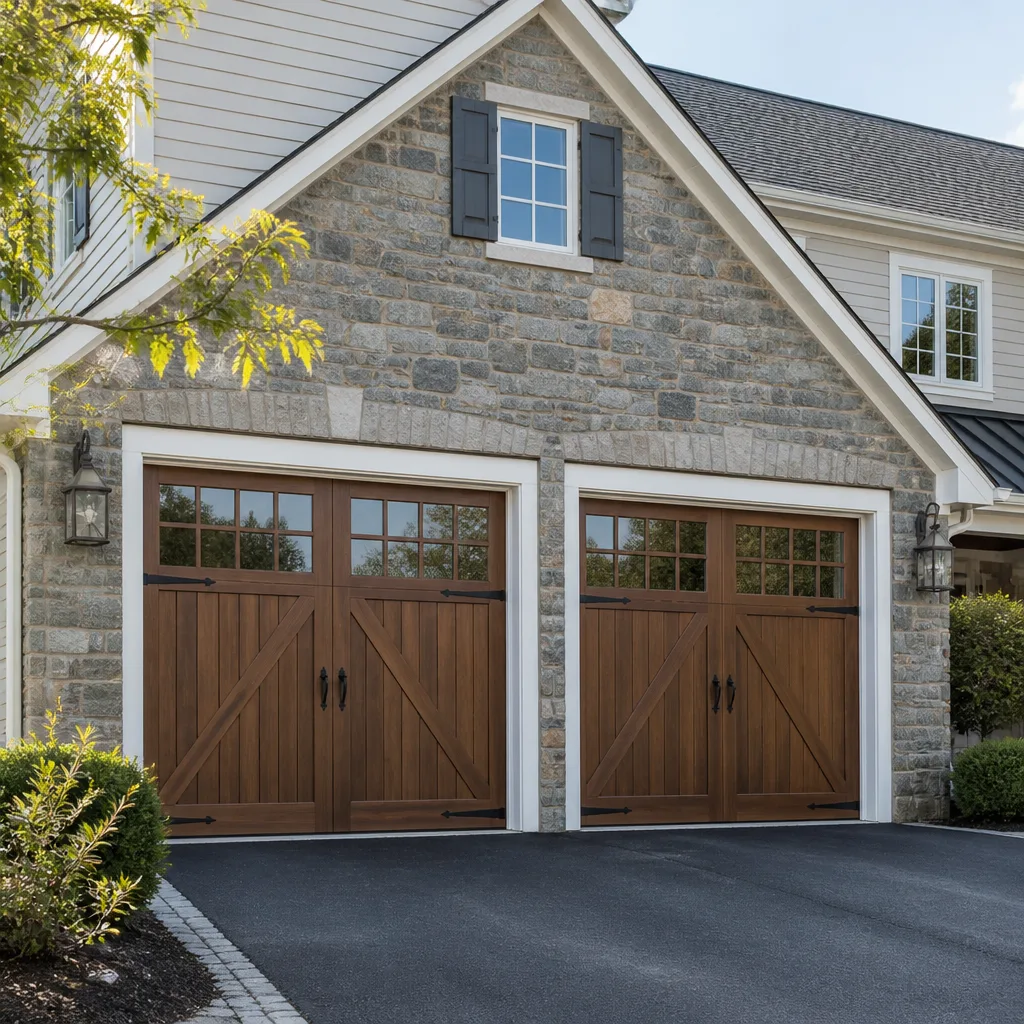 Carriage house
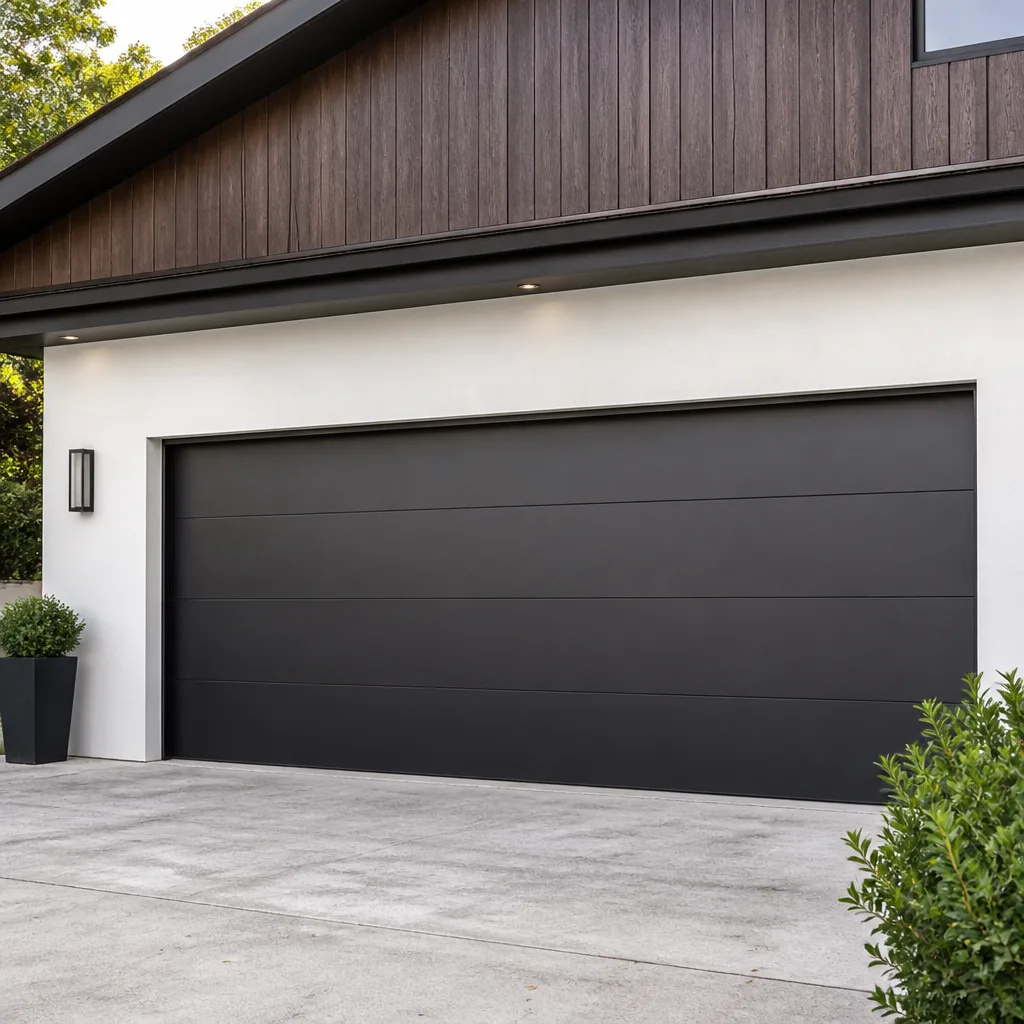 Modern flush
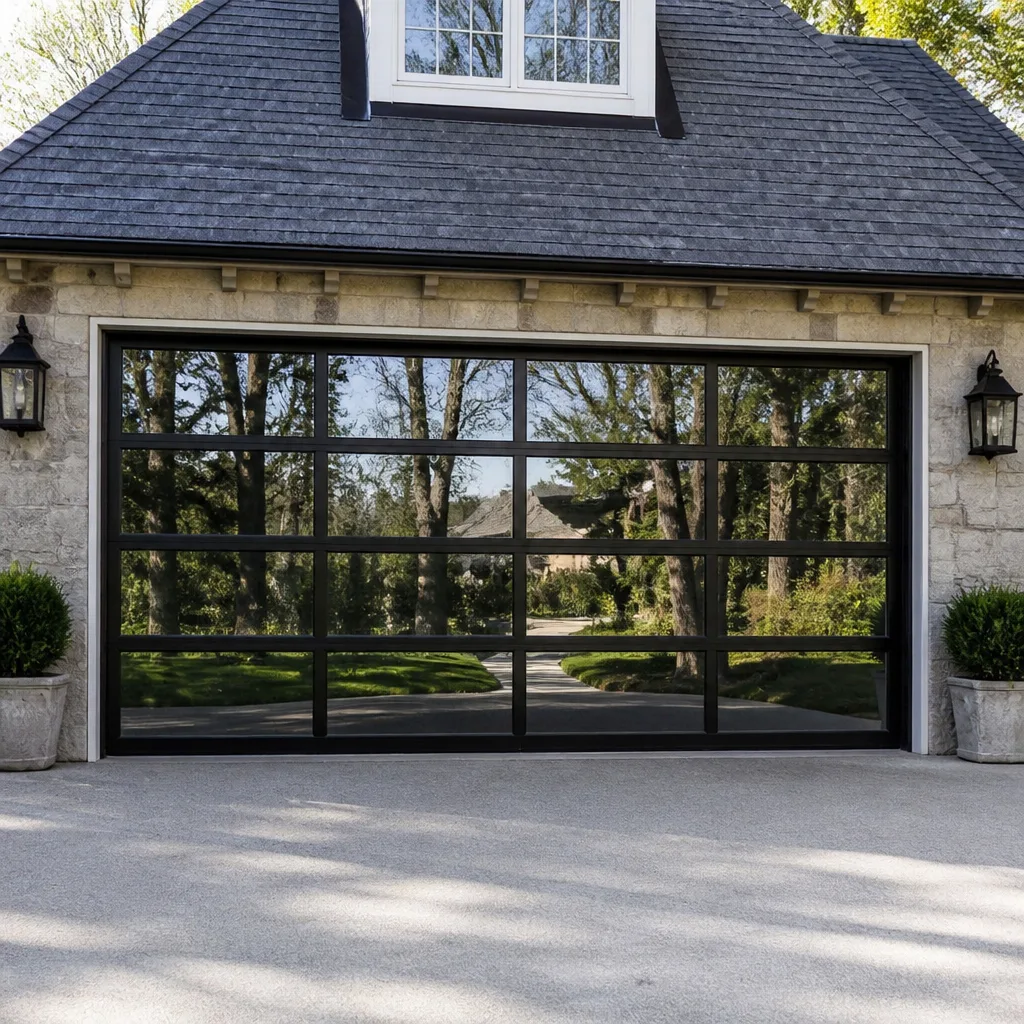 Full-view glass
 LiftMaster openers
 Chamberlain openers
Full 25-point door and opener safety check with every visit - springs, cables, rollers, tracks, and your LiftMaster or Chamberlain opener included
You get a price before we start. It does not change when the pro arrives.
Get your free estimateGarage Door Repair Maintenance Schedule: What to Do and When
The rollers on a 10-year-old door have cycled roughly 15,000 times. The springs are rated for 10,000. If you’ve never replaced your springs, you’re not maintaining your door – you’re waiting for it to fail. That gap between what a door has actually done and what its parts were built for is the whole point of this guide. Most maintenance advice tells you to lubricate twice a year and call it done. That schedule ignores how a garage door ages part by part. We’ll build a calendar around real component lifespans and the seasonal stress that Petersburg puts on doors, so you’re maintaining what actually breaks.
Quick Answer
A garage door maintenance schedule in Petersburg should pair monthly visual checks with two seasonal service windows: a late-spring check before summer humidity, and a late-fall check before the first freeze. Lubricate moving metal parts twice a year, replace weatherstripping every few years as Virginia’s freeze-thaw cycle wears it out, and watch your springs and cables against the lifespans in this guide. Most costly failures are predictable well before they happen.
Styles & brands we work with
- Raised-panel steel
- Carriage house
- Modern flush
- Full-view glass
- LiftMaster openers
- Chamberlain openers
Table of Contents
- Component Lifespans: What Actually Wears Out and When
- The Two Seasonal Windows That Matter Most in Petersburg
- What Lubrication Really Means (And What Never Gets Lubed)
- Your 60-Second Monthly Inspection Checklist
- Springs and Cables: The Parts You Watch, Not Touch
- Weatherstripping and Seals in Virginia’s Freeze-Thaw Climate
- The Cost Math: Annual Maintenance vs. Emergency Repair
- Brand-Specific Maintenance Notes
Component Lifespans: What Actually Wears Out and When
Every part on a garage door has a working life, and they don’t run out at the same time. Knowing the natural lifespan of each component tells you which one to watch this year and which one to budget for down the road. We work on doors across Petersburg every week, and the failures we see follow these lifespans closely, whether the door is a lift-style Amarr or an older Wayne Dalton that’s been opening and closing for years.
Here’s the working life we expect from each component in a typical residential door:
- Springs: rated for about 10,000 cycles, which works out to roughly 7 to 10 years for most households. A cycle is one open and one close.
- Nylon rollers: 10 to 15 years. Steel rollers wear out faster and get noisy sooner.
- Lift cables: 5 to 7 years before fraying or wear becomes a concern.
- Weatherstripping and bottom seal: 3 to 5 years in Virginia’s freeze-thaw cycle, where a seal that stays flexible in summer gets stiff and cracked by winter.
- Opener motor: varies widely, but most last longer than the door hardware around them, and often the opener outlives its own logic board or remote.
- Hinges and bearings: 10 years or more with regular lubrication.
The lesson here is simple: the spring is often the first part to hit its limit, and it’s the part with the most safety riding on it. A door that’s 10 years old with original springs has likely run through its rated life already. If you’ve been diligent about everything else except the springs, you’ve maintained the cheap parts and neglected the critical one.
The Two Seasonal Windows That Matter Most in Petersburg
Petersburg sits in a part of Virginia where the seasons push on a door in two distinct ways. Summer brings heavy, humid air and afternoon thunderstorms. Winter brings freeze-thaw cycles that open and close cracks, stiffen rubber, and work on wood. The maintenance schedule that holds up here is built around those two pushes, not a generic spring-and-fall plan.
Pre-summer window (late spring, before the humidity settles in):
- Check any wood components on the door and frame for swelling or slight buckling as humidity climbs – wood doors in Petersburg are especially prone to seasonal expansion.
- Realign the safety sensors after spring storm season. Thunderstorm winds and shifting ground can nudge a sensor bracket out of line without anyone touching it.
- Look for storm damage – hail is uncommon here, but windblown debris and branch strikes are not, and a small dent on a panel can turn into a bent track.
Pre-winter window (late fall, before the first freeze):
- Lubricate before cold weather stiffens the grease already on the door. Lubricant that sits too thick in the cold makes the opener work harder.
- Inspect the bottom seal before freeze-thaw begins. A seal that’s already cracked will let cold air in all winter and often fails outright by February.
- Test the auto-reverse and safety sensors again, since a stiff door in cold weather can reveal an opener that’s starting to struggle.
If the door is older or you’ve never had it serviced, garage door repair in Petersburg can catch small winter issues before they become cold-morning surprises. A trained eye in October costs far less than a broken door in January.
What Lubrication Really Means (And What Never Gets Lubed)
“Lubricate your door” is advice everyone repeats and almost nobody explains. In practice, it means a few specific parts get the right product, and one big part gets nothing at all. Getting this wrong is common, and it’s the reason some doors get noisier after a homeowner’s best intentions.
Here’s the breakdown we use on every door:
- Lithium grease or white lithium spray goes on the torsion spring coils, the bearing plates, and the hinges. These are high-friction metal-on-metal points that benefit from a heavier, longer-lasting film.
- Silicone spray goes on the rollers, the hinges again if they’re nylon-bushed, and the bottom seal. Silicone stays clean and doesn’t attract dust the way heavier products can.
- Never lubricate the track itself. The track is meant to be clean and dry. Lubricant on a track collects grit, and grit wears rollers and makes the door drag. If a track is rough or sticky, it should be cleaned and inspected, not greased.
- Skip the old advice about oiling the spring with whatever’s in the garage. The wrong product, especially a thick engine-type oil, holds dust and hardens in cold weather.
Do this twice a year – once in the pre-summer window and once before winter – and you’ll prevent most of the noise and strain that shortens roller and bearing life. If your door is new enough to still be under hardware warranty, check the manufacturer’s guidance first, since some Amarr and Wayne Dalton doors specify particular lubricants.
Lubrication is also a good moment to listen. A door that’s properly lubed should run quietly. If it still grinds or thumps after a good lubrication, the problem is mechanical, not lubrication, and it’s worth a look before it grows. We’ve found that the doors we service regularly need fewer major repairs because small sounds get addressed while they’re small.
Your 60-Second Monthly Inspection Checklist
You don’t need tools for this. Once a month, walk out to the door, look and listen, and you’ll catch most developing problems before they become emergency calls. This is the check any homeowner can do, and it’s the one most people skip.
Run through this in about a minute:
- Look at the springs above the door. A visible gap in a torsion spring, or a stretched and separated extension spring, means the spring is broken. Don’t operate the door.
- Check the cables on each side for fraying, kinks, or slack. Cables should look tight and smooth.
- Run the door and listen. A rhythmic squeak, a bang, or a grinding sound is a signal. Note where the sound comes from.
- Watch the door balance. If it moves unevenly, jerks, or won’t stay put when you disengage the opener halfway, the spring tension or track alignment needs attention.
- Wave a hand in front of the sensors while the door is closing. It should stop and reverse. If it doesn’t, don’t use the opener until it’s fixed.
- Eyeball the tracks for dents, bends, or debris. Tracks should be straight and clean.
- Check the bottom seal for cracks, gaps, or places where it’s pulled away from the door.
If any of those checks fails, write it down and address it. In our experience, most emergency calls trace back to a warning sign that was visible for weeks. The monthly check turns a surprise into a scheduled visit.
Springs and Cables: The Parts You Watch, Not Touch
Springs and cables are the two parts most likely to fail and the two that put you at the greatest risk if you try to fix them yourself. We say that plainly because it’s true on every door, not just the heavy ones. A garage door spring is under high tension, and releasing that tension incorrectly can cause serious injury. This is a job for a trained technician.
What you should do is watch, not touch:
- Watch for a broken spring sign: a gap in the coil, a door that feels extremely heavy to lift, or a door that won’t lift at all.
- Watch the cables for fraying or slack. A slack cable on one side can let the door drop unevenly.
- Never try to adjust, remove, or replace tension springs or cables yourself. Leave that to a professional with the right tools, including the winding bars the job requires.
Springs are one of the most common failures we handle, and garage door spring repair in Petersburg is a named specialty for us precisely because it demands the right equipment and training. Cables are in the same category: they’re under tension too, and a snapped cable can whip. If either looks suspect, treat it as a same-day call rather than a weekend project.
The good news is that replacing a worn spring before it breaks lets you avoid a door stuck open or shut at the worst moment. Spring lifespan is predictable: 7 to 10 years or about 10,000 cycles. If your door is approaching that mark with original springs, schedule the replacement instead of waiting for the break.
Weatherstripping and Seals in Virginia’s Freeze-Thaw Climate
Weatherstripping is the cheapest part of your maintenance schedule and the one most affected by Petersburg’s climate. Virginia’s freeze-thaw cycle means a seal that stays soft and flexible through a humid summer gets repeatedly frozen and thawed through the winter. That cycling is what cracks it, pulls it away from the frame, and turns it from a tight seal into a drafty gap.
A worn seal does more than let cold air in. It lets moisture, insects, and debris in, and it can leave a visible gap at the bottom of a closed door. On a home where the garage is attached, that gap also affects how well the rest of the house holds temperature.
Check the weatherstripping as part of your pre-winter inspection and replace it every 3 to 5 years, sooner if you see any of these:
- Cracks, tears, or a hard, brittle feel when you press it.
- Gaps you can see light through at the bottom corners or along the sides.
- A seal that’s pulled away from the door or frame.
- Water or debris visible inside the threshold after a rain.
Bottom seals are a quick replacement and one of the easiest wins in the whole schedule. If you’re already having the door serviced before winter, ask whoever is doing the work to check the seal at the same time. It’s the sort of small item that’s easy to forget until you’re standing in a draft.
The Cost Math: Annual Maintenance vs. Emergency Repair
The numbers here are typical ranges for the Petersburg market, and the comparison is the case for maintenance in one line. A scheduled annual maintenance visit usually runs $80 to $120. A genuine emergency call for a failure that routine inspection would have caught typically runs $400 to $600 once parts and labor are included. The written estimate sets the final price on any job.
Here’s how a typical maintenance visit and an emergency repair compare:
- Annual maintenance visit (lubrication, adjustment, inspection): $80 to $120
- Emergency service call for a broken spring or stuck door: $400 to $600, depending on the parts needed
- Spring replacement (one spring): quoted per job; a matched pair is usually replaced together and costs about twice a single spring
- Roller replacement set: priced within the repair quote for the visit
These are typical estimated ranges for Petersburg, not a fixed price list. The written estimate you get before any work starts is the number that counts, and we don’t add to it after the fact. If a visit uncovers something the estimate didn’t cover, you’ll hear about it before anyone touches the door.
The math favors maintenance by a wide margin. Three to five years of scheduled checkups cost less than one emergency repair, and the checkups catch the wear while it’s still small. That’s the calculation behind every schedule in this guide – not just that maintenance is good, but that it’s cheaper than the failures it prevents.
If you’re unsure whether your door is due for a checkup or a repair, our Petersburg Garage Door Repair Pros team does free estimates and upfront pricing, and we’ll tell you which you actually need.
Brand-Specific Maintenance Notes
Different manufacturers build doors and openers with different hardware, and knowing the brand helps a technician diagnose by how that system was designed, not by guesswork. We work on your brand – the same eight leading names in doors and openers – and we’ve built up a feel for the common patterns in each. A few examples worth knowing as a homeowner:
- Amarr doors often use torsion hardware with specific bearing plate designs. Learning the brand’s layout makes servicing and spring work faster and safer.
- Wayne Dalton doors sometimes use proprietary track and roller combinations, which means off-the-shelf parts don’t always fit. Knowing that ahead of a visit saves time.
- Craftsman openers are common in Petersburg homes, and their logic boards and remotes have quirks worth knowing when diagnosing a door that won’t respond.
- Raynor doors often pair with heavy-duty hardware suited to commercial-grade springs and tracks, which affects how often each part needs inspection.
The point of knowing all eight brands is that a maintenance visit should be brand-aware, not generic. When we look at your door, we’re thinking about what that specific system is likely to need at its age and what its common failure points are.
Openers are a big part of that. The two dominant smart-home brands – LiftMaster and Chamberlain’s myQ ecosystem – show up in a large share of homes here, alongside Genie and Craftsman. If your opener is smart-home connected, checking the sensor alignment and testing the app’s open and close functions is part of the pre-season check. Garage door opener repair in Petersburg can address a failing opener before you’re outside in the cold trying to get in.
Common Mistakes to Avoid
We see the same handful of mistakes in Petersburg over and over. Each one turns a manageable maintenance item into a bigger repair.
- Ignoring the springs because the door still opens. A spring can be weak or partially broken and the door can still move, but the opener is doing work the spring should be doing. Keep an eye on spring age and replace on schedule.
- Lubricating the track. Greasing the track is the most common mistake we see, and it collects grit, wears rollers, and makes the door noisy. Keep the track clean and dry.
- Waiting for a noise to get louder. A squeak or grind is a small fix now and a bigger one later. Address it when you first hear it.
- Skipping the pre-winter check because the door felt fine in October. Cold weather is when stiff seals and heavy grease reveal themselves. Get the check in before the first freeze, not after.
- Letting a storm-damaged panel or bent track sit. A bent track can wear rollers and bind the door. Left long enough, it leads to a bigger repair.
- Moving the safety sensors out of curiosity without resecuring them. A bumped sensor can go out of alignment for weeks before anyone notices the door risking a close.
- Assuming a new door doesn’t need anything. New doors need their first adjustment after settling, and old doors need a structured schedule, not just a lucky break.
See the difference
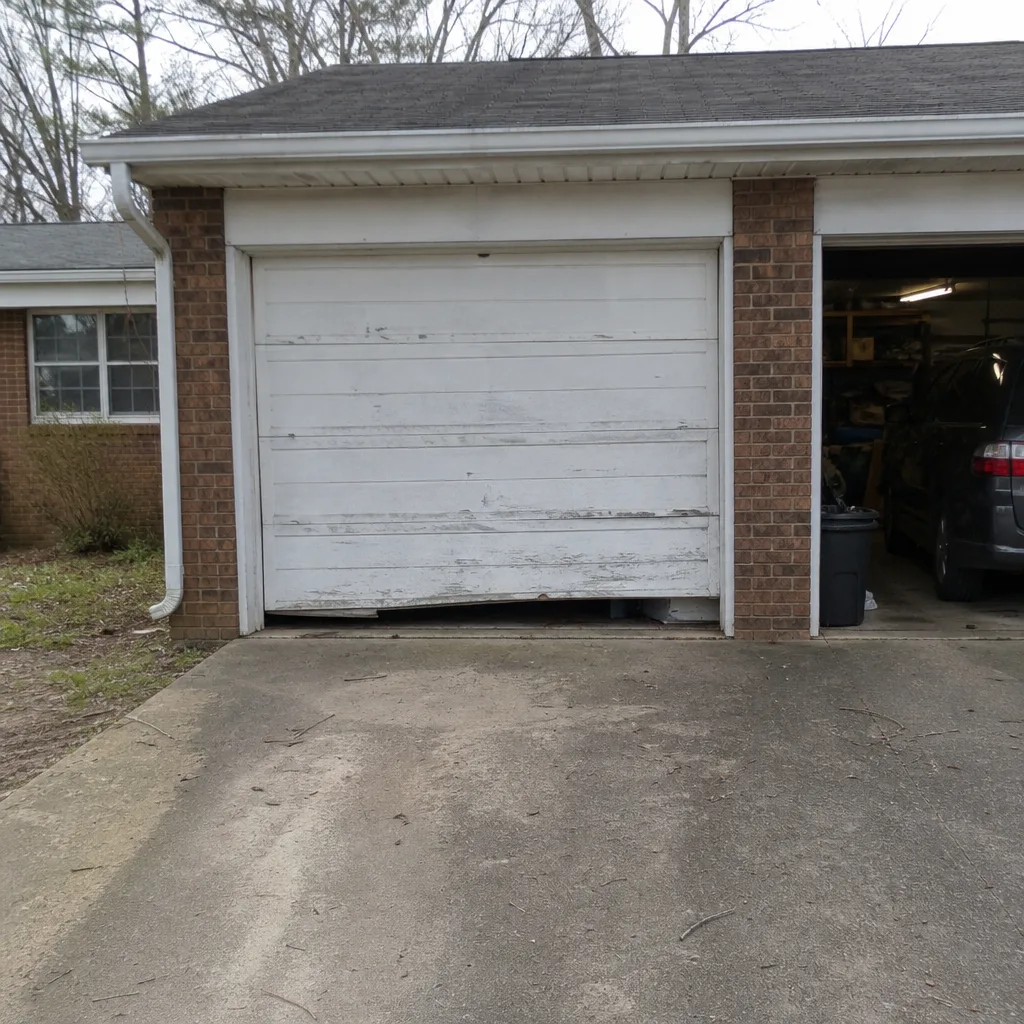 Before
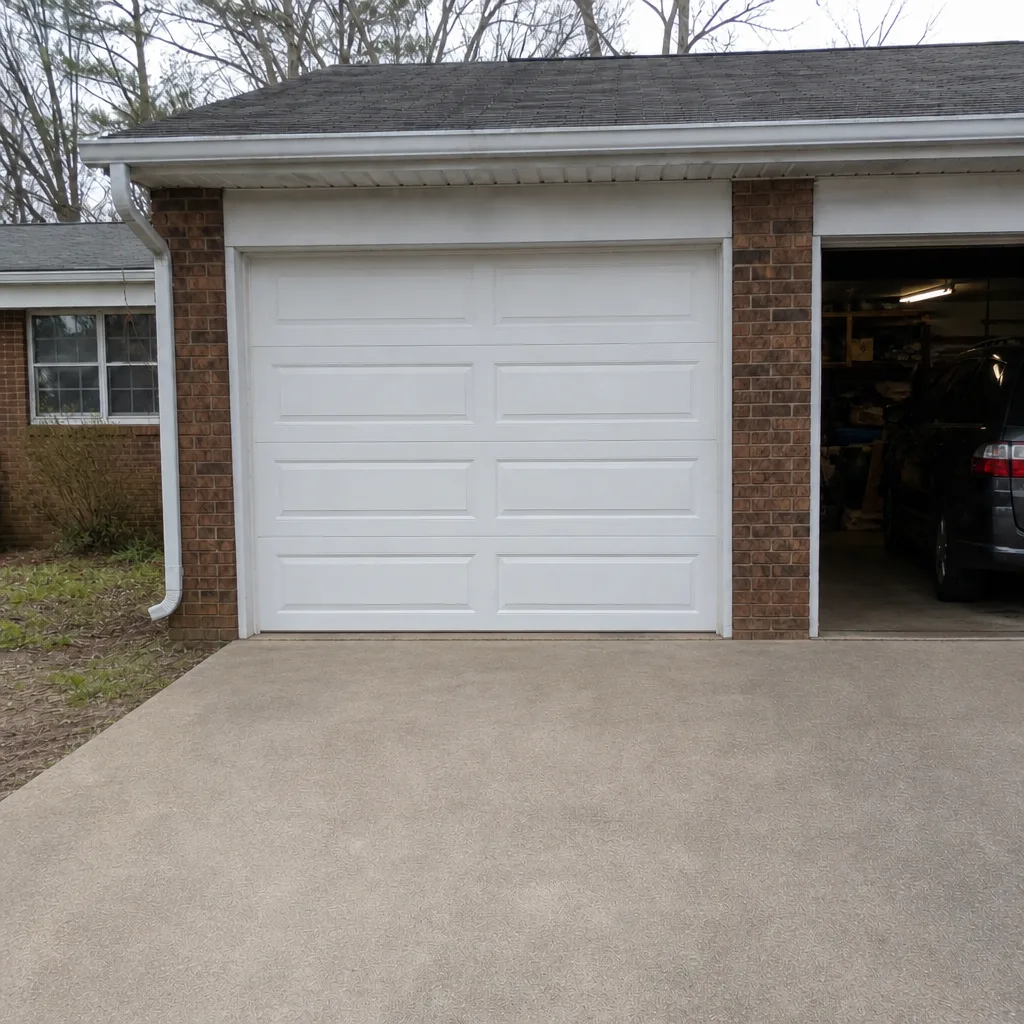 After
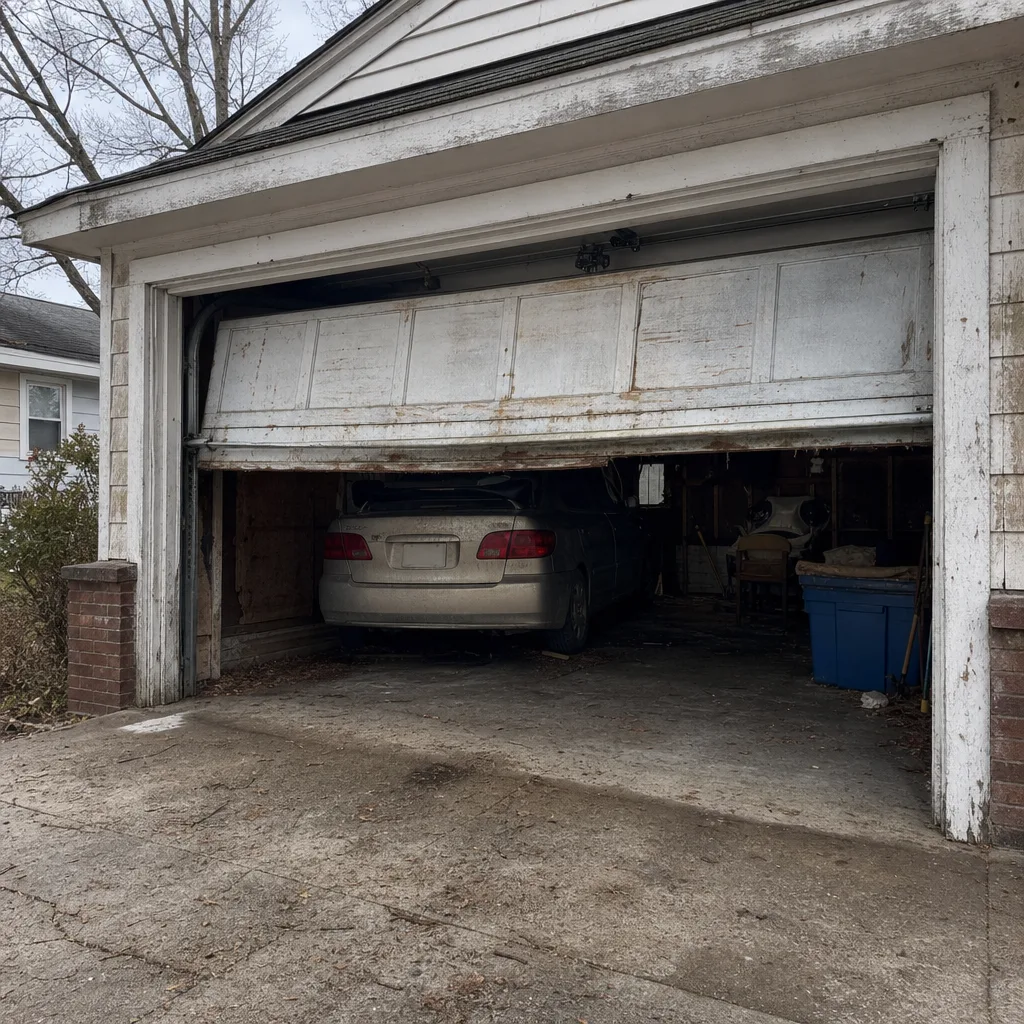 Before
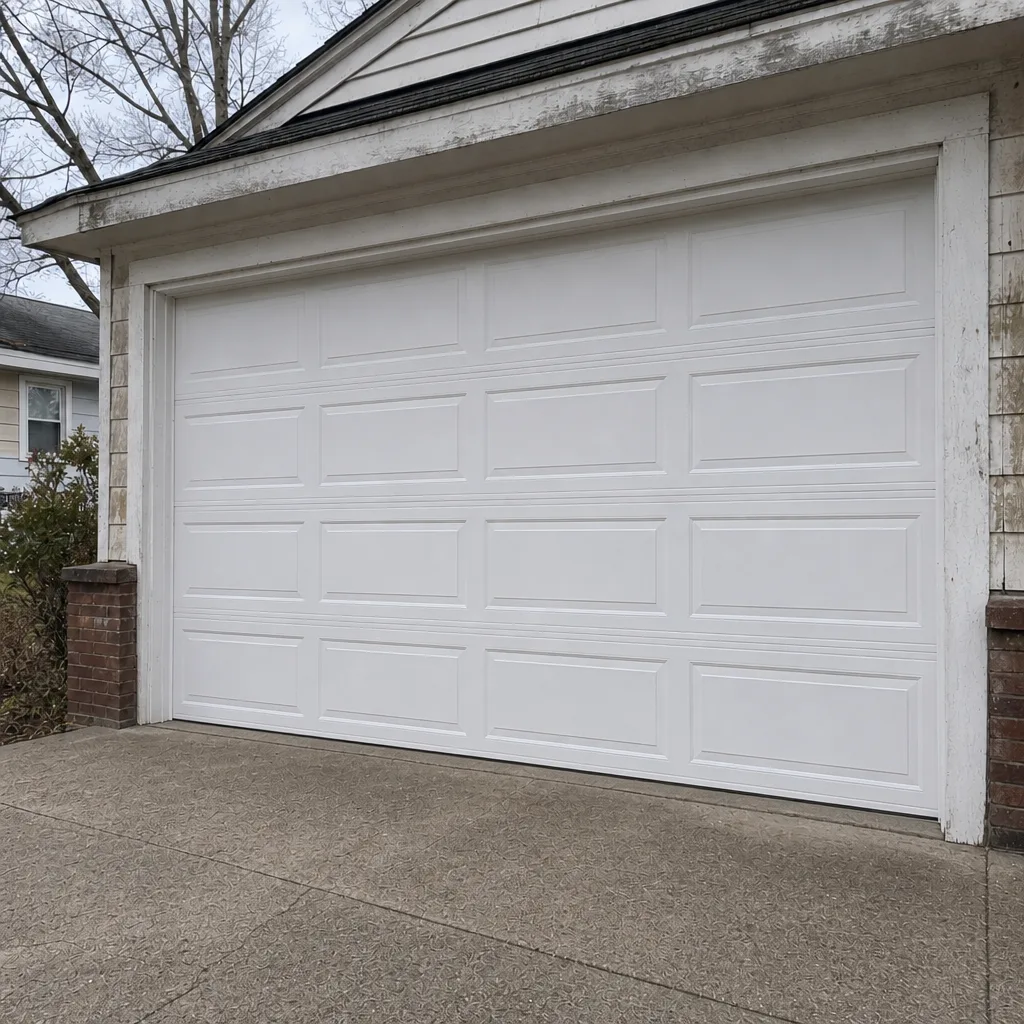 After
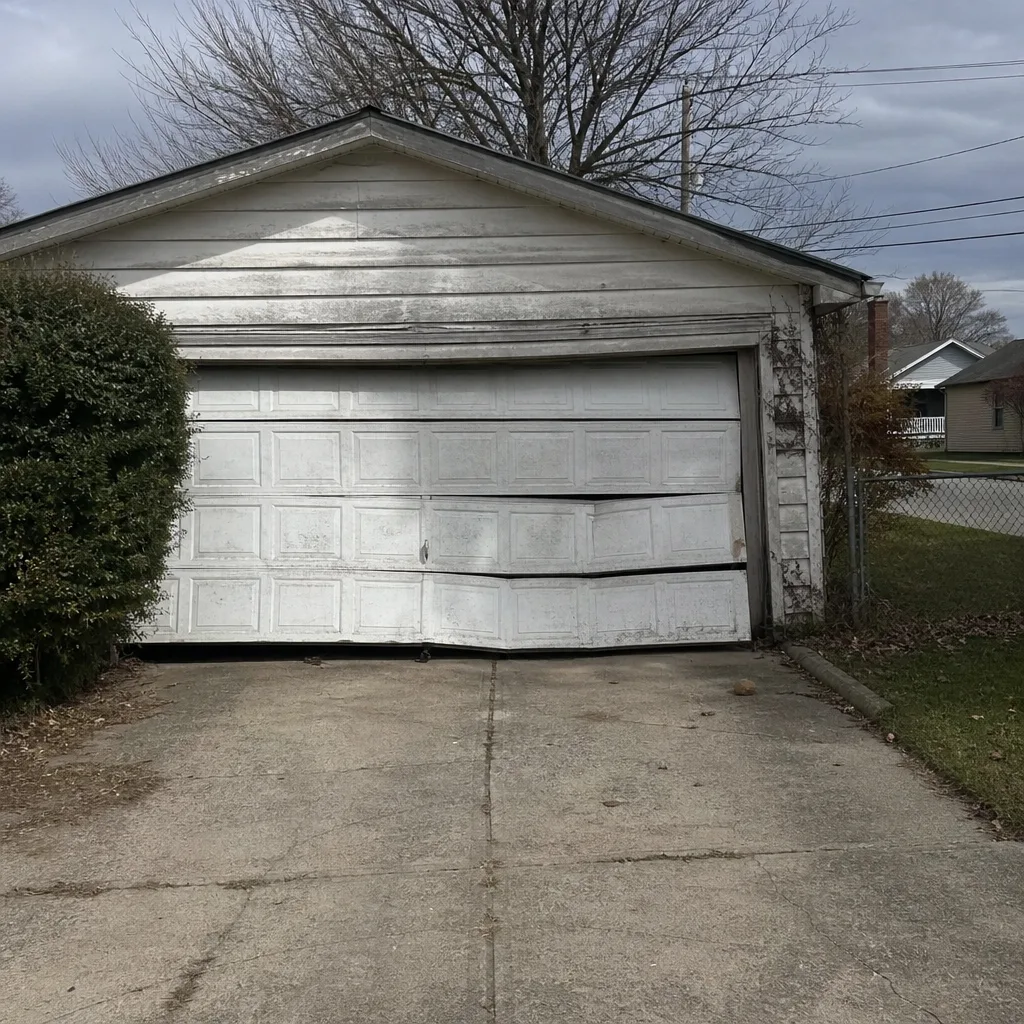 Before
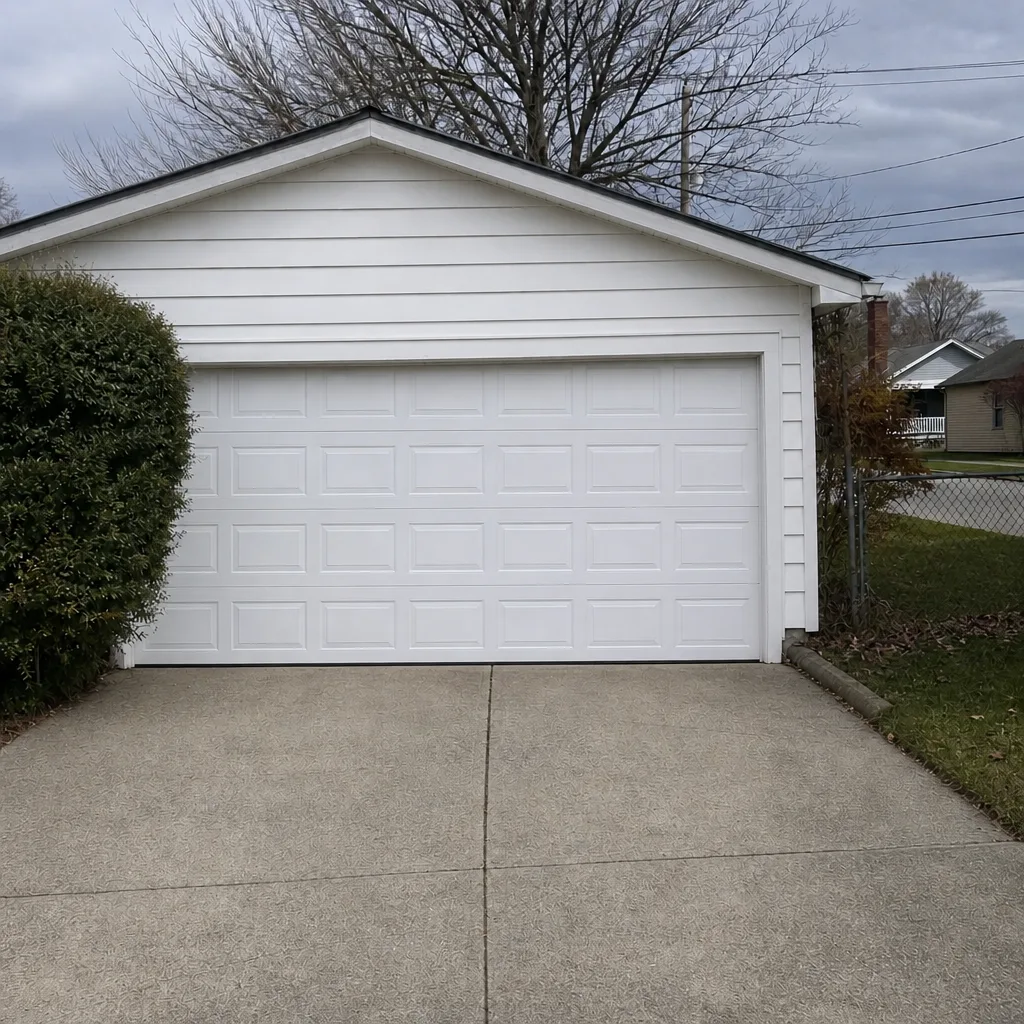 After
When to Call a Professional
Call a professional any time you see a broken spring, a slack or frayed cable, or a door that’s come off its track. Those are the same-day situations – they’re hazardous to touch and they put the whole door at risk. Call us too if the door won’t close fully, if the opener reverses without a clear reason, or if a noise persists after a proper lubrication. For routine maintenance, a professional visit once or twice a year handles the checks and adjustments most homeowners can’t safely do. Petersburg Garage Door Repair Pros offers free estimates in Petersburg – call (844) 791-5308. We answer 24/7. Fast dispatch from 7am to 7pm, Sunday through Friday.
Frequently Asked Questions
Twice a year is the working rule for a Petersburg door, timed to the two seasonal windows in this guide: once before summer humidity and once before the first freeze. A spring, cable, or opener problem found during those visits is usually cheaper and simpler than the failure it prevents. Call (844) 791-5308 for a free estimate on a service visit.
Yes, spring repair is usually same-day work when the part is on hand, and it’s one of our named specialties. A broken spring means the door should not be operated until it’s repaired, so call as soon as you see the gap. Call (844) 791-5308 – estimates are free.
Before winter, lubricate the moving metal parts, inspect the bottom seal for cracks, and test the auto-reverse and safety sensors. Virginia’s freeze-thaw cycle is hard on weatherstripping, so a pre-winter check catches a seal that would otherwise fail in January. Call (844) 791-5308 for a pre-winter service visit.
No – the track should stay clean and dry. Lubricant on the track collects grit, and grit wears rollers and makes the door drag. Apply lubricant to the springs, hinges, and bearings instead. Call (844) 791-5308 if you’re not sure which parts need what.
About 7 to 10 years, or roughly 10,000 open-and-close cycles. If your door is at that age with original springs, it’s worth scheduling a replacement before the spring breaks. Call (844) 791-5308 to book a spring inspection.
Yes, typically $80 to $120 for an annual maintenance visit compared with $400 to $600 for an emergency repair the maintenance would have prevented. The written estimate sets the final price, and we quote before we start. Call (844) 791-5308 for a free estimate.
The Bottom Line
A garage door doesn’t fail at random – it fails when a part reaches the end of its working life, and most of those endings are predictable. Build your schedule around the lifespans in this guide: springs at 7 to 10 years, nylon rollers at 10 to 15, cables at 5 to 7, and weatherstripping at 3 to 5 in Virginia’s freeze-thaw cycle. Pair that with the two seasonal windows for Petersburg, a 60-second monthly check, and a lubrication routine that skips the track. Then let the $80 to $120 annual visit do the work of a $400 to $600 emergency. Our technicians have up to 8 years of experience and know the eight leading brands well enough to diagnose by how the door was built, not by guesswork.
Call Petersburg Garage Door Repair Pros at (844) 791-5308 for a free estimate. We answer 24/7. Fast dispatch from 7am to 7pm, Sunday through Friday.
Written by the team at Petersburg Garage Door Repair Pros.