
Last updated November 23, 2026
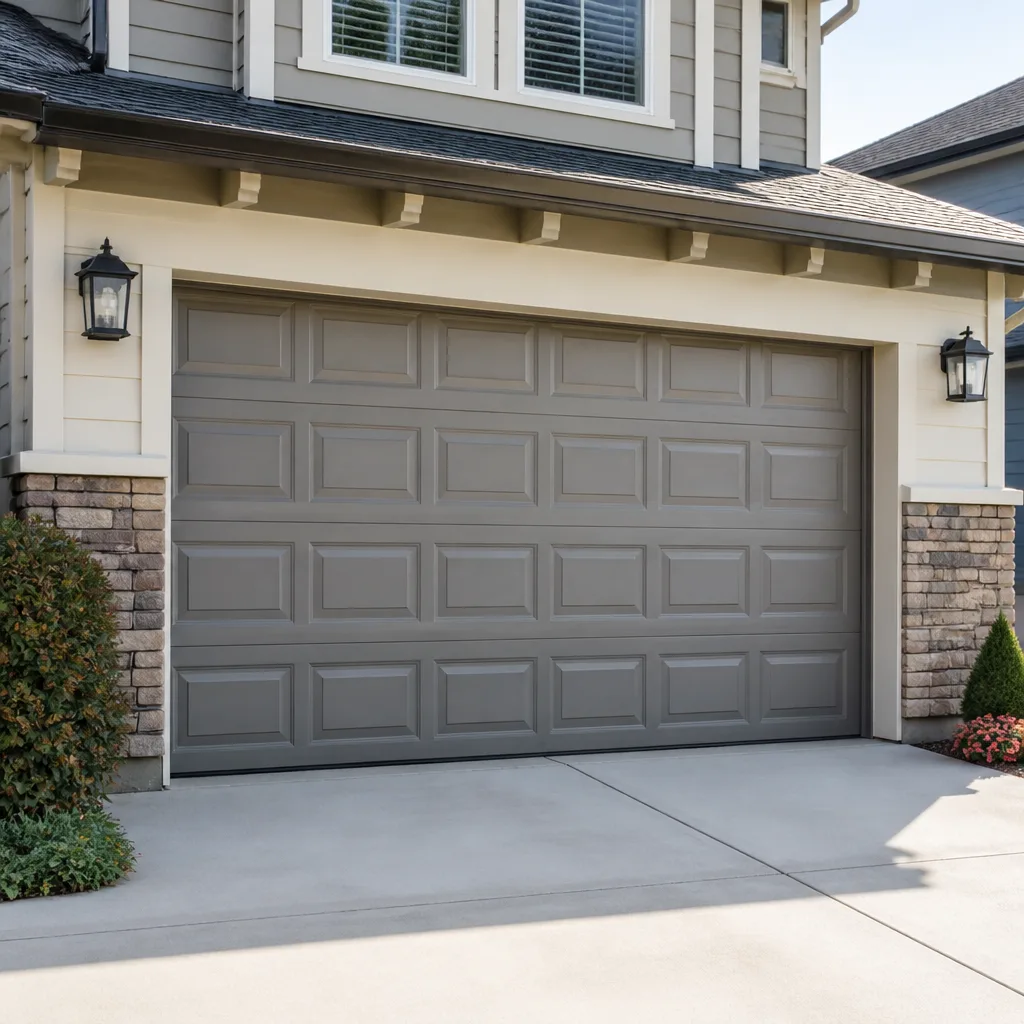 Raised-panel steel
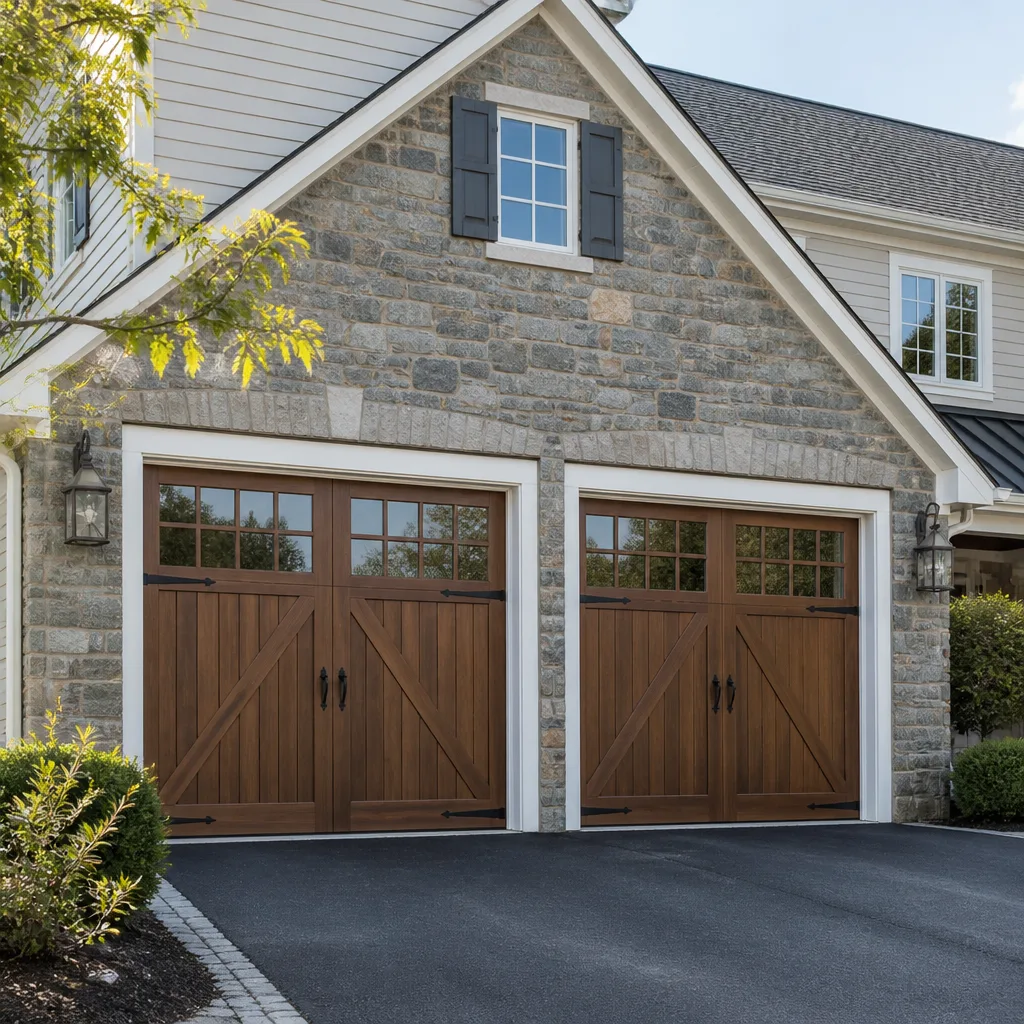 Carriage house
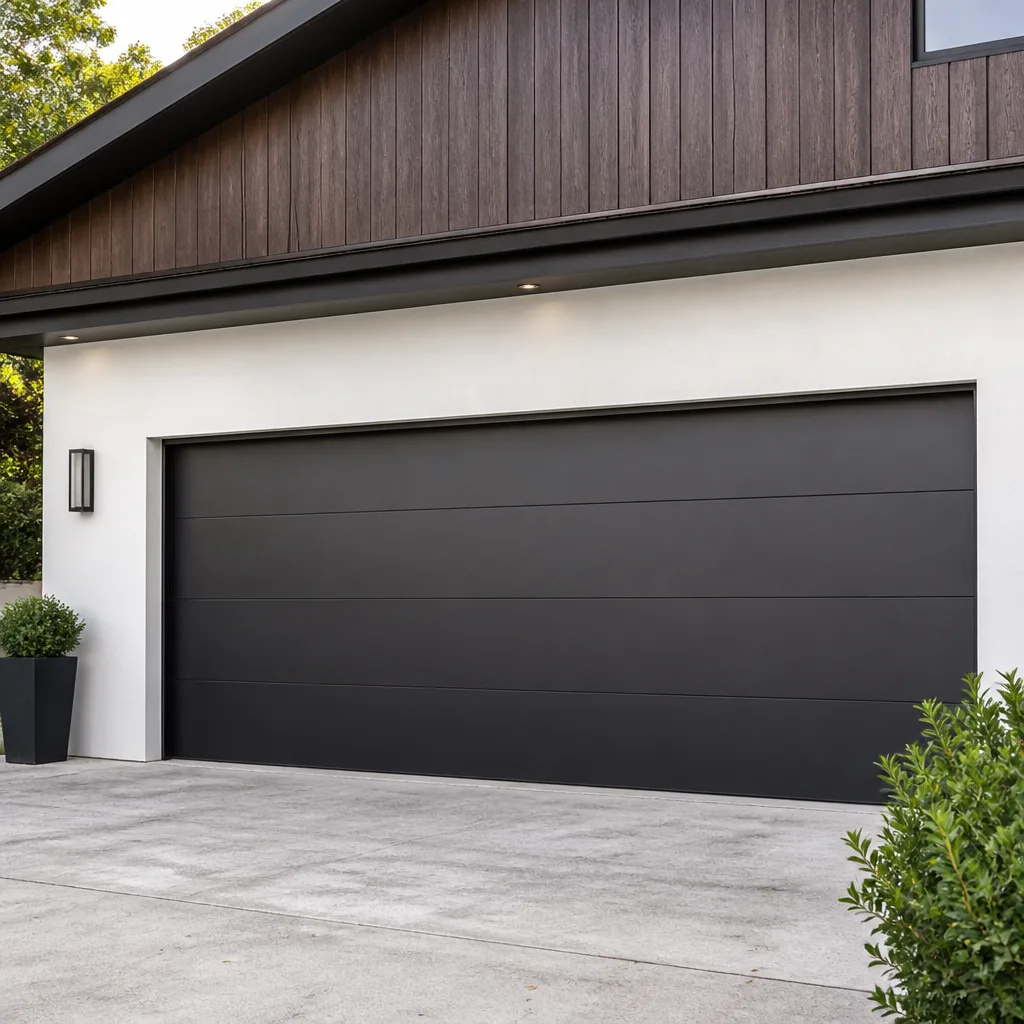 Modern flush
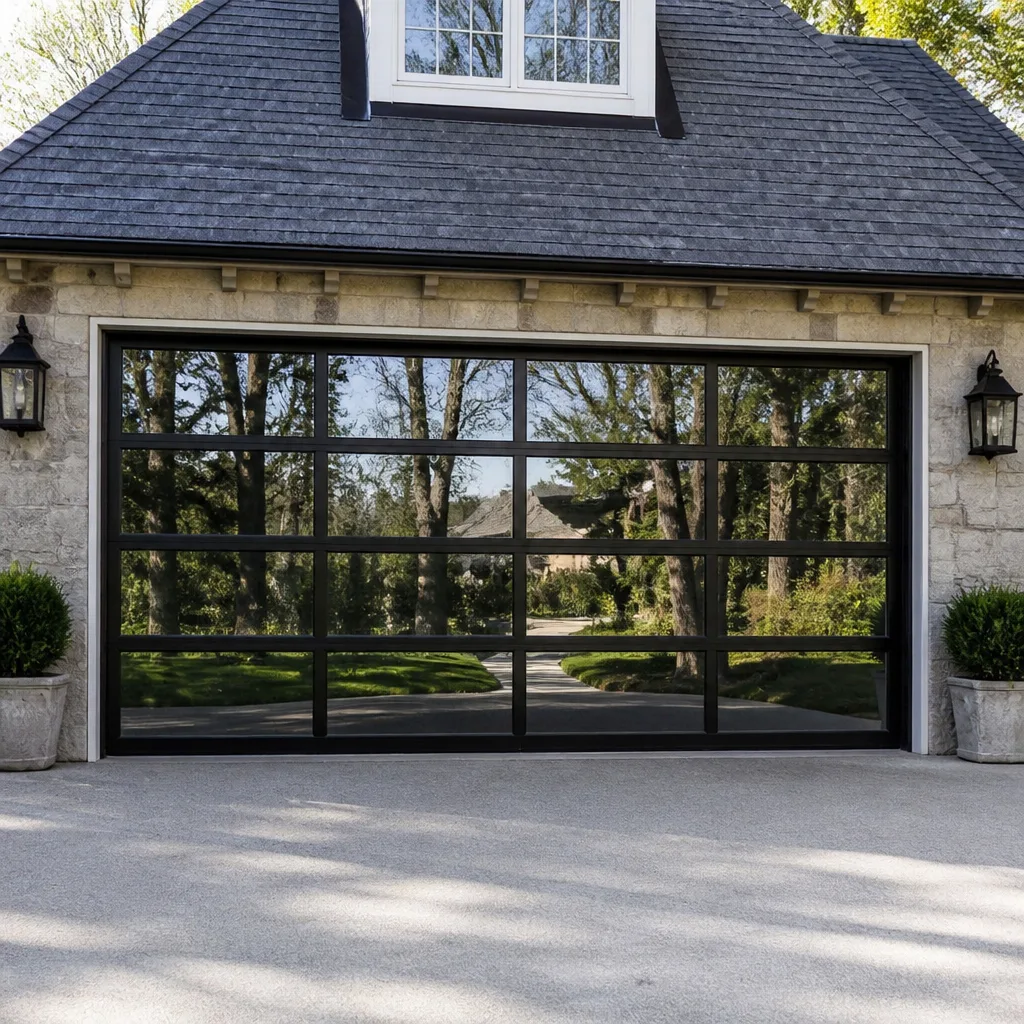 Full-view glass
 LiftMaster openers
 Chamberlain openers
Full 25-point door and opener safety check with every visit - springs, cables, rollers, tracks, and your LiftMaster or Chamberlain opener included
You get a price before we start. It does not change when the pro arrives.
Get your free estimateGarage Door Emergency Preparedness Guide for Petersburg Homes
During a Petersburg ice storm, most garage door calls come from homeowners who didn’t know their opener had a manual release. It’s a cord that takes eight seconds to pull, and it would have let them get their car out without a service call. That gap between “I own a garage door” and “I know how my garage door works” is exactly what this guide closes. You don’t need thirty pieces of preparation. You need three or four that actually apply to the emergencies Petersburg homes see: summer thunderstorms, winter ice, and power outages. Here’s what to learn now, before you need it.
Quick Answer
Garage door emergencies in Petersburg almost always come down to three causes: a snapped or unwound spring, a door stuck open or closed after a power loss, or impact damage from a vehicle or falling limb. The single most valuable thing you can do in advance is learn your opener’s manual release procedure and test it once. The second is knowing which failures you can wait on and which need a call tonight. Springs are the one component you should never touch yourself; high-tension springs can cause serious injury and belong to a trained technician.
Styles & brands we work with
- Raised-panel steel
- Carriage house
- Modern flush
- Full-view glass
- LiftMaster openers
- Chamberlain openers
Table of Contents
- The Manual Release: Eight Seconds That Save a Service Call
- Power Outage Protocol for Petersburg Homes
- When a Spring Breaks: What to Do and What Never to Do
- The 15 Minutes After a Vehicle Hits Your Garage Door
- Storm Preparation: The 10-Minute Hardware Check
- True Emergency vs. Urgent vs. Nuisance
- Common Mistakes to Avoid
- Frequently Asked Questions
The Manual Release: Eight Seconds That Save a Service Call
Every residential garage door opener sold in the last several decades has a manual release: a cord hanging from the trolley that disconnects the door from the opener motor so you can lift it by hand. Homeowners who know where that cord is and how it behaves can get their car out during an outage in under a minute. Homeowners who don’t end up calling us when the power comes back and the door still won’t move, which is often a release that was pulled wrong or pulled and never reconnected.
Here’s the procedure, and it’s the same in principle for the opener brands we work on most in Petersburg homes, including LiftMaster, Chamberlain, Genie and Craftsman:
- Make sure the door is fully closed before you pull anything. The release is designed to be used with the door down. Pulling it with the door half-open can let the door drop.
- Pull straight down on the cord, firmly and steadily. Don’t yank sideways. The trolley needs to slide free of the carriage.
- Lift the door by hand, using the bottom section or a handle. A properly balanced door should lift with modest effort. If it feels heavy at the start and then wants to fall, stop; that points to a spring problem, not an opener problem.
- Reconnect before running the opener. Push the door back to fully closed, then pull the cord again or follow the reconnect step in your opener manual. Running the opener with the door disconnected will just cycle the trolley and leave you confused about why the door won’t move.
The mistakes that make the release fail
- Pushing before pulling. Some homeowners try to shove the door up first, which binds the trolley against the carriage. Pull the release, then lift.
- Pulling a release on a door with a broken spring. The door will be far heavier than it should be. Don’t force it. Call for garage door spring repair.
- Forgetting to reconnect. Then the opener runs, the door doesn’t, and it looks like an opener failure when it’s a five-second fix.
- Pulling on the wrong cord. On some openers there’s a separate emergency cord for the door itself. If you’re unsure which is which, that’s a good reason to have a technician walk you through it during a routine visit.
If you’ve never tested your release, do it on a calm afternoon with the door closed and nothing in the way. Testing it once teaches you more than reading about it ten times. Petersburg homes with older openers especially benefit, since a stiff or rusted trolley may not release cleanly and is better discovered before an outage than during one.
Power Outage Protocol for Petersburg Homes
Summer thunderstorms and winter ice events knock out power across Petersburg neighborhoods regularly, and a garage door that won’t open because the opener has no electricity is the most predictable “emergency” we hear about. Most of the time it isn’t an emergency at all; it’s a manual operation you can do yourself, provided the door’s springs are healthy.
If you have a battery backup opener
Many newer openers, including current LiftMaster and Chamberlain models, ship with or accept a battery backup unit. When the power drops, the opener runs on the battery and works normally for a limited number of cycles. If your opener has this feature, the first thing to check during an outage is whether the door responds; if it does, you’re fine until the battery drains. That battery is worth replacing on a schedule, not waiting for it to fail during the one outage that matters.
If you don’t have battery backup
- Use the manual release as described above, with the door fully closed first.
- Lift the door by hand. If it’s balanced, you can open and close it manually as many times as you need until power returns.
- If you’re leaving the door open while you’re away, engage any manual lock on the door and don’t rely on the opener’s hold.
- When power returns, reconnect the door to the opener before cycling it.
Never force a door that’s spring-broken
Here’s the line that matters: if the door feels heavy or slams down, a spring is likely broken, and forcing it up by hand puts the full weight of the door on you and the hardware. A double-wide door with a broken spring can weigh what a small motorcycle does. Don’t lift it. Don’t try to prop it. Call for a technician. Springs are dangerous, and this is a job for a trained technician, not a weekend project. If your door won’t budge and you’re not sure why, our garage door repair team can diagnose it and get you back on track today.
When a Spring Breaks: What to Do and What Never to Do
A broken torsion spring is usually loud: a sharp bang, sometimes followed by the door dropping partway and staying there. A broken extension spring may be quieter, but you’ll notice the door suddenly heavy when you try to lift it, or you’ll see the spring hanging loose on one side. In Petersburg, spring failures cluster around temperature swings, which is why the first hard freeze of winter and the first heat wave of summer both bring a wave of calls.
What to do
- Keep the door closed and leave it alone. Don’t run the opener. Don’t lift the door. Don’t try to force it down if it’s stuck open.
- Check that no one, especially a child or a pet, is under or near the door.
- Call for repair. Most spring jobs are same-day work, and a technician will confirm one spring or a matched pair when they inspect it.
What never to do
Don’t try to wind, unwind, cut, or remove a torsion spring yourself. Torsion springs are under extreme tension even when they look relaxed, and the tools used to wind them are specialized for a reason. This is the single hardest DIY mistake we see discussed online, and it’s the one most likely to send someone to a hospital. Leave it to a trained technician. It’s also worth knowing that a spring repair is priced per spring, and because most doors use a matched pair, replacing both at once is usually the right call; the estimate will spell out exactly what’s being replaced and what it costs before any work starts.
What the repair involves
A technician measures the old spring, matches the wire gauge and inside diameter, winds the new spring to the manufacturer’s spec, and then tests the door’s balance and opener force limits. That last step is what separates a proper repair from a “it’s up, good enough” fix. If you’ve been told your door needs springs and you want to understand what that job entails, our page on garage door spring repair walks through it in detail.
The 15 Minutes After a Vehicle Hits Your Garage Door
Backing into a garage door happens in Petersburg as often as anywhere: tight driveways, a hurried morning, a teenager learning to park. The important question after the bang isn’t “how bad is it,” it’s “is the door safe to leave closed.” Here’s the sequence that answers that, in order.
- Stop the vehicle and turn it off. Don’t try to drive forward to “un-stick” the door; that can tear the track loose from the framing.
- Look at the tracks. Are they bent, bowed, or pulled away from the wall? If a track is deformed, the door can come off it, and that’s a call-now situation.
- Look at the panels. Cracked or displaced panels are common and usually repairable. A door that’s dropped out of vertical is not.
- Check the spring and cables. A hard impact can snap a cable or unseat a spring. If either looks slack or hanging, don’t operate the door.
- Test the opener once, from a safe distance, with no one near the door. If it moves cleanly and stops normally, the door is likely safe to leave closed overnight. If it grinds, jerks, or reverses immediately, stop and call.
- If the door is stuck open and won’t close, that’s a security problem. A door that won’t close is usually the reason homeowners call us after dark, and it’s a good reason to.
If the door won’t close, don’t try to force it with the opener repeatedly. Forcing a misaligned door can bend the panels further and turn a panel replacement into a full door replacement. If the door is stuck open and you need help getting it closed safely, Petersburg Garage Door Repair Pros answers the phone when it matters.
Storm Preparation: The 10-Minute Hardware Check
Petersburg sits where summer thunderstorms and winter ice both make regular appearances, and the most common storm-related garage door failure isn’t the door itself; it’s the hardware that was already loose before the storm arrived. Ten minutes of checking before a named storm hits prevents most of it.
- Tug every hinge. Loose hinges rattle in high wind and can pull backing plates out of the door. If a hinge wiggles, it needs tightening.
- Check the track bolts at the wall. These hold the whole door to the building. If a bolt is backing out, a strong gust can finish the job.
- Look at the springs. Rust, gaps in the coil, or a visibly stretched extension spring means it’s near the end of its life. A storm is the worst time to find out.
- Check the weather seal at the bottom. A torn seal lets wind-driven rain in, which is the leading cause of a wet garage floor after a storm.
- Test your opener’s safety reverse. Put a small box in the door’s path, run the door, and confirm it reverses. If it doesn’t, the safety eyes or force limits need service before storm season.
- Clear the driveway approaches. Loose limbs and debris near the door are what end up under it when the wind picks up.
If your door is an older Clopay, Amarr, Wayne Dalton or Craftsman model, storm prep is a good moment to have a technician look at the whole system, especially if you’ve noticed the door getting heavier. Opener quirks after a storm are common too. If the door works but the opener doesn’t, that’s usually garage door opener repair, not a door replacement.
The post-storm check
After a storm passes, walk the door once before running the opener. Look for debris in the tracks, a door that’s sitting unevenly, and any new damage to panels. Running a door with a limb caught in the track is the fastest way to bend a track and turn a cleanup into a repair.
True Emergency vs. Urgent vs. Nuisance
Part of being prepared is knowing which problems deserve a call right now and which can wait for a scheduled visit. Here’s how we draw the line, based on the situations that actually come up in Petersburg.
True emergency: call tonight
- The door is stuck open and won’t close, leaving the house exposed.
- A vehicle or tree limb has pushed the door out of its tracks and the door is hanging.
- The door dropped suddenly and the spring is visibly broken, and you need to leave or secure the house.
- A person or animal is trapped under the door or the door is suspended unsafely.
For anything on this list, call (844) 791-5308. We answer 24/7, and a call outside dispatch hours is booked into the next opening, Sunday through Friday, 7am to 7pm, with fast dispatch from 7am to 7pm during the week.
Urgent: call first thing tomorrow
- The opener runs but the door doesn’t move; likely a release or operator issue.
- A strange noise on open or close, such as grinding or popping, that’s new.
- The safety reverse has stopped working and the door still operates.
- One spring of a pair looks stretched or one extension spring is loose while the door still operates.
Nuisance: schedule at your convenience
- A squeak or rattle that hasn’t changed the door’s operation.
- One remote that’s stopped working while the wall button still does.
- A weather seal that’s torn but the door still seals most of the way.
- The door runs a little faster or slower than it used to, without noise or binding.
When in doubt, call. We’d rather tell you it can wait than have you force a door that shouldn’t be forced. A free estimate tells you exactly what’s going on, and there’s no service-call fee to find out.
Common Mistakes to Avoid
- Pulling the manual release before the door is fully closed. A half-open door with no tension on the spring can drop. Close it first, then pull.
- Forcing a door after a spring breaks. This is the mistake with the worst consequences. If the door won’t lift easily, stop and call.
- Ignoring a door that won’t close all the way. In Petersburg, a door that stops short often means a track or safety sensor issue that gets worse, and a door that won’t close is also a security problem.
- Running the opener with the trolley disconnected. That cycles the motor against nothing and leaves you thinking the opener is broken when it isn’t.
- Skipping storm prep because the door “looked fine.” Loose hinges and backing bolts are invisible until the first big gust, and they take minutes to check.
- Replacing a door when only a panel or opener is bad. A failed opener on an otherwise healthy door is opener work, not a new door. We diagnose the part before we recommend the whole.
- Trying a spring repair as a DIY job. Torsion springs hold stored energy that can hurt you badly. This is the one garage door repair that always belongs to a trained technician.
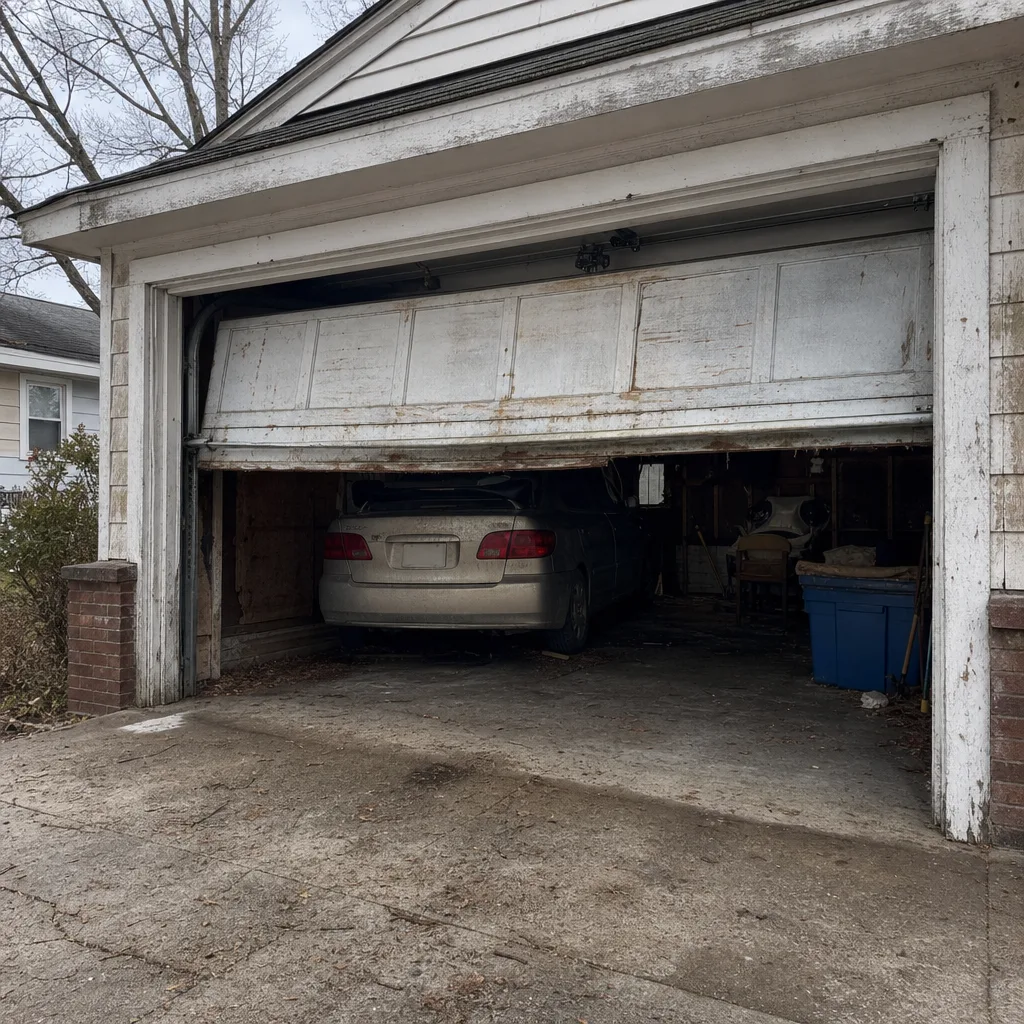
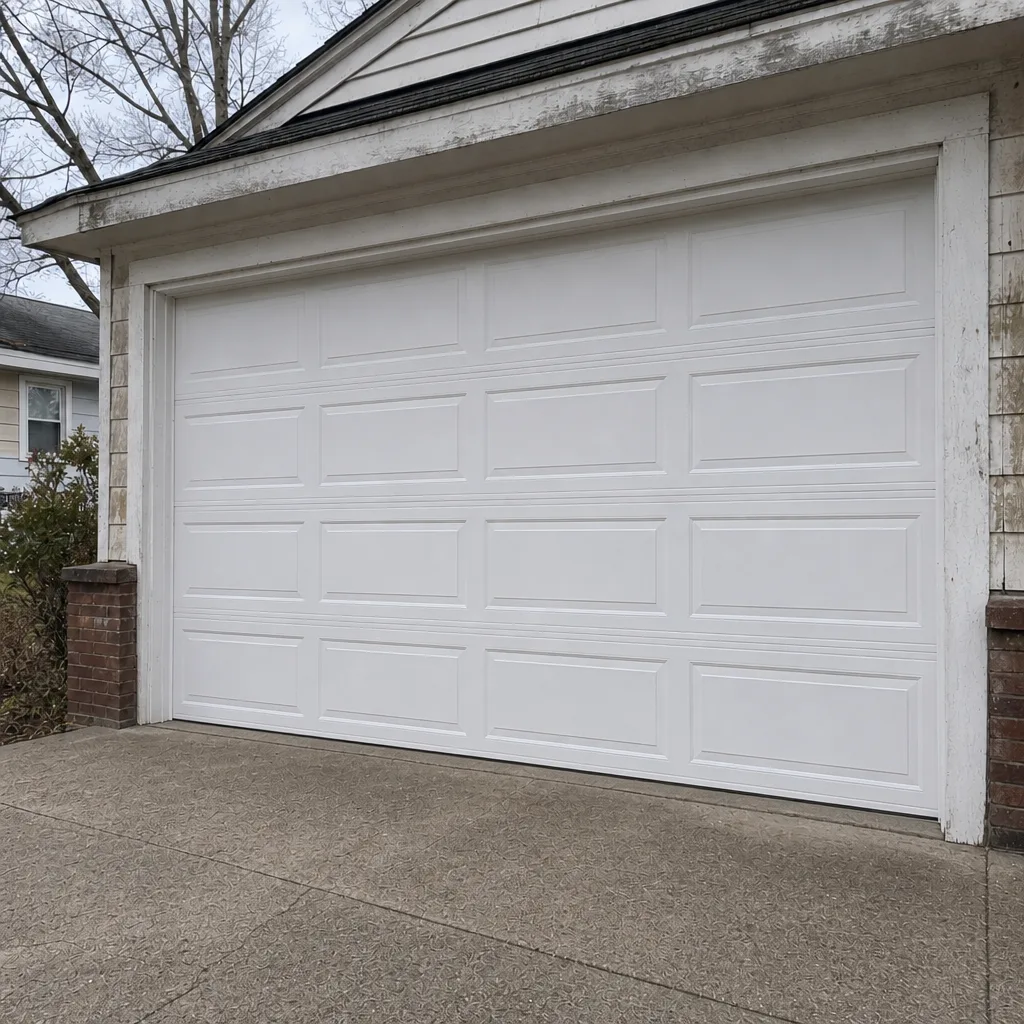
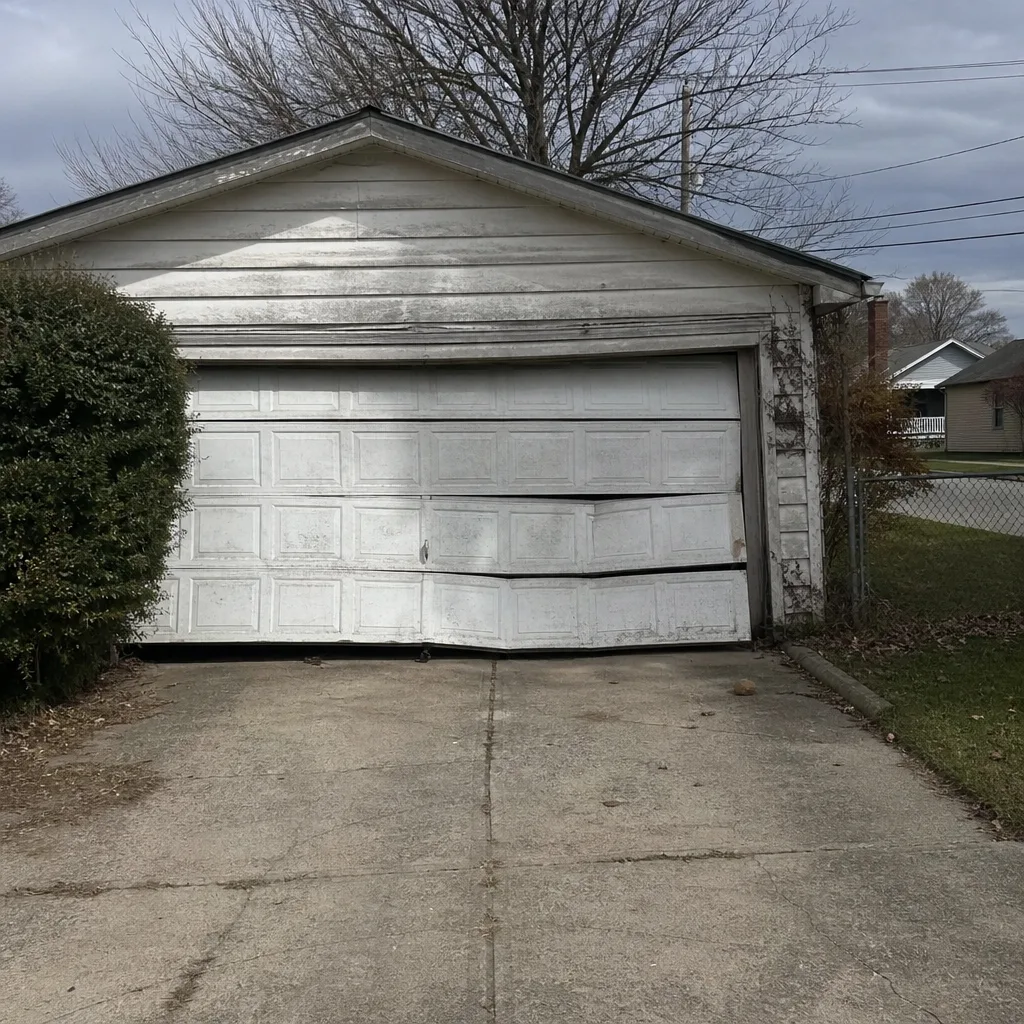
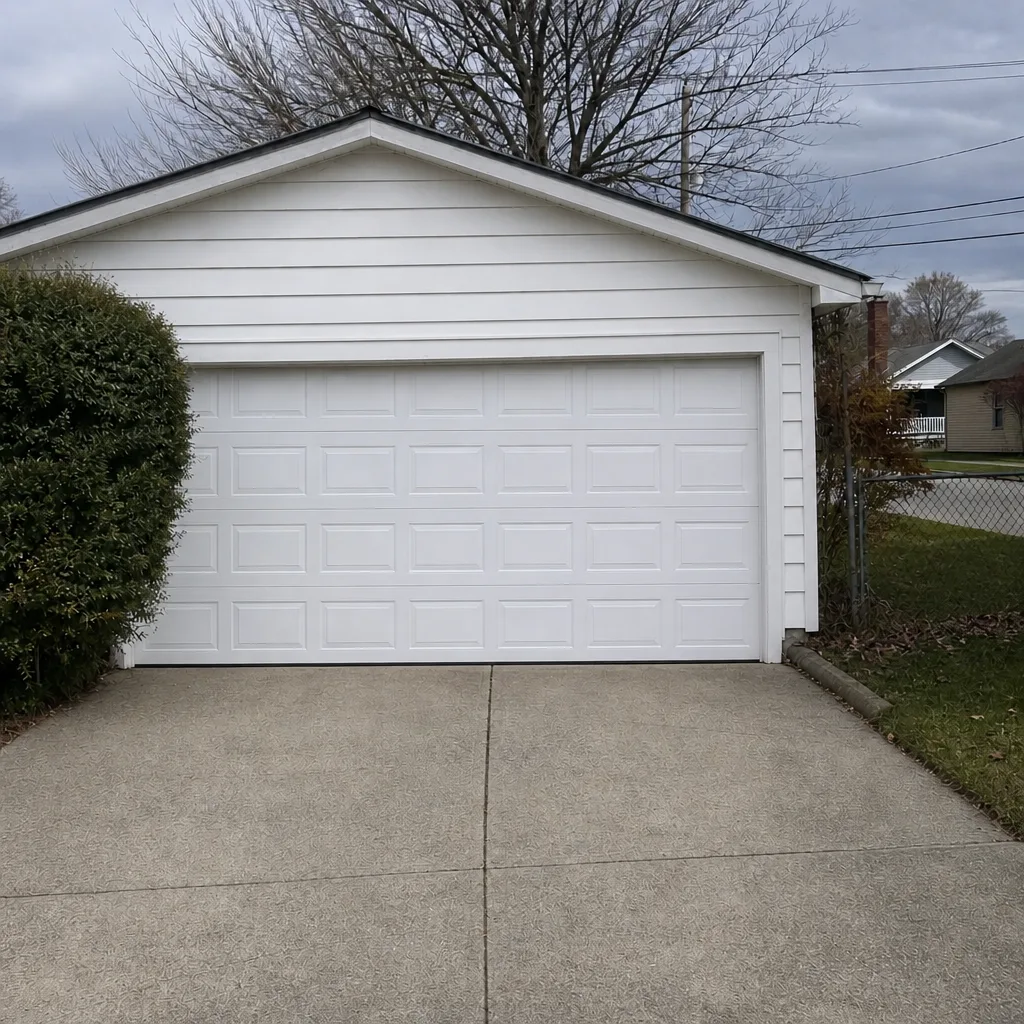
See the difference
 Before
 After
 Before
 After
 Before
 After
When to Call a Professional
Call a technician when a spring is broken, when the door is hanging or out of its tracks, when the door won’t close and the house is exposed, or when you’ve had an impact and the door isn’t sitting square. Call when the opener runs but nothing moves, when the safety reverse has failed, or when a storm has left the door making a new noise. Don’t call when it’s a squeak, a single dead remote, or a weather seal; those can wait for a scheduled visit, and we’re glad to tell you so. Petersburg Garage Door Repair Pros offers free estimates in Petersburg. Our technicians have up to 8 years of experience and work on the eight leading door and opener brands, including Clopay, Amarr, Wayne Dalton, Lifmaster, Chamberlain, Genie, Craftsman and Raynor. Call (844) 791-5308 for a free estimate. We answer 24/7, and a call outside dispatch hours is booked into the next opening, Sunday through Friday, 7am to 7pm.
Frequently Asked Questions
Use the manual release cord that hangs from the opener trolley. With the door fully closed, pull the cord straight down until the trolley disconnects, then lift the door by hand. If the door feels too heavy to lift, stop; a broken spring is a professional repair. Reconnect the trolley before running the opener when power returns. If you’re not sure which cord is the release, call (844) 791-5308 and we’ll talk you through it; estimates are free.
A door stuck open and won’t close, a door hanging out of its tracks after an impact, a spring that’s visibly broken with the door down, or anyone trapped under or near an unsafe door. Those are call-tonight situations. A new grinding noise, a failed safety reverse, or an opener that runs without moving the door can wait for a scheduled visit. If you’re unsure, call (844) 791-5308; we’d rather help you triage than have you force the door.
No. Torsion and extension springs hold stored energy that can cause serious injury even when the door looks relaxed, and the tools used to wind them are specialized for the job. Every spring repair should go to a trained technician. If your door has a broken spring, call (844) 791-5308 for a free estimate; most spring jobs are same-day work.
Yes, for a limited number of cycles. Battery backup openers, including current LiftMaster and Chamberlain models, run the door normally on battery after the power drops. Once the battery drains, you’re back to the manual release. If your opener has backup, replace the battery on a schedule so it’s ready when the next storm knocks out power in Petersburg. Call (844) 791-5308 if you’re not sure whether your opener has backup.
It’s urgent, not automatic. A door that won’t close all the way often points to an obstruction in the safety sensor, a bent track, or a limit setting issue. If the door is stuck open and the house is exposed, call tonight at (844) 791-5308. If you can secure it, schedule a visit; the estimate is free and the price is set before any work starts.
The estimate is free and priced per job by a written estimate, given before any work begins. A spring repair is priced per spring, and because most doors use a matched pair, replacing both usually makes more sense than one. Emergency work isn’t priced at a premium; it’s priced like any other job. Call (844) 791-5308 for an exact quote; estimates are free.
The Bottom Line
Most garage door emergencies in Petersburg come down to three things: a spring that fails, a door that won’t operate without power, or an impact that knocks the door out of line. Learning your manual release, testing it once, checking your hardware before a named storm, and knowing which failures are true emergencies will handle the majority of them without a service call. Springs are the exception; those are always a technician’s job. When something does go wrong and you’re not sure, call (844) 791-5308. We answer 24/7, dispatch Sunday through Friday, 7am to 7pm, and the estimate is free.
Written by the team at Petersburg Garage Door Repair Pros.