
Last updated November 23, 2026
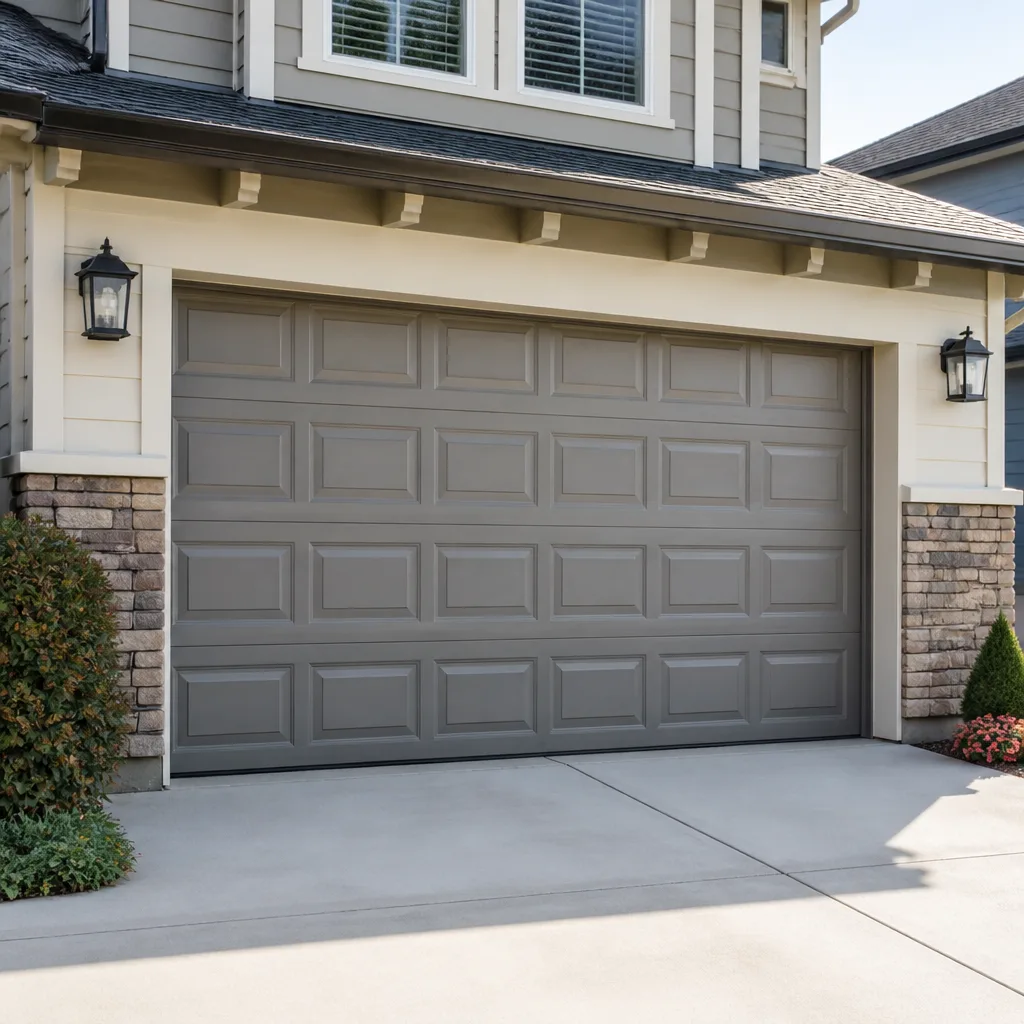 Raised-panel steel
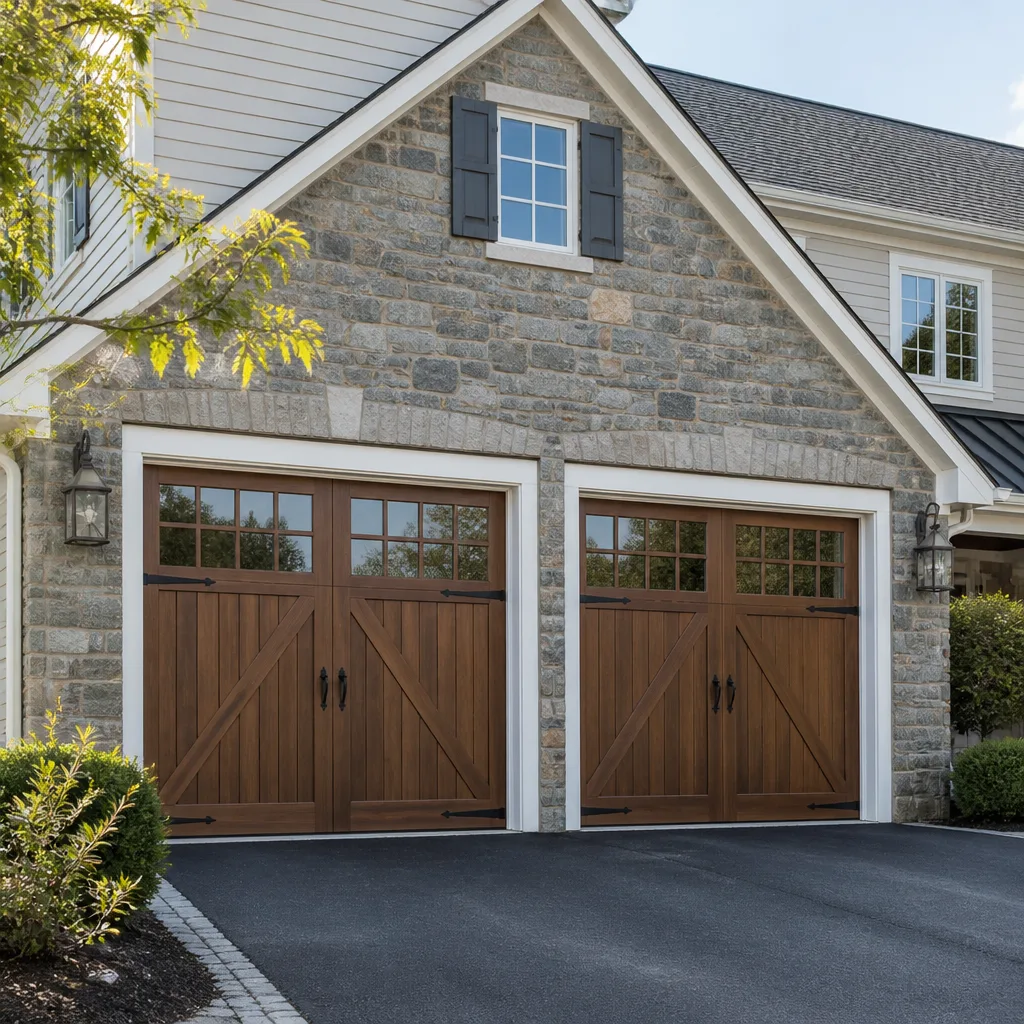 Carriage house
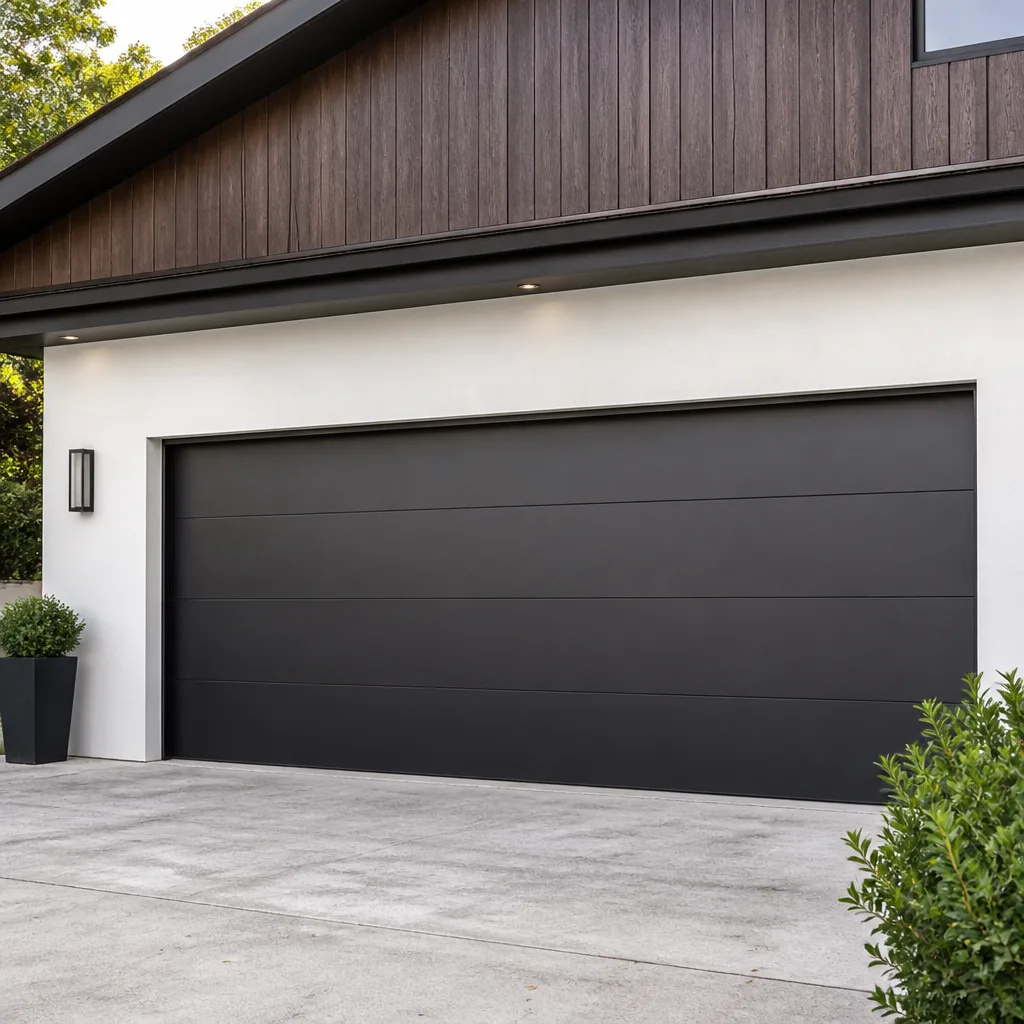 Modern flush
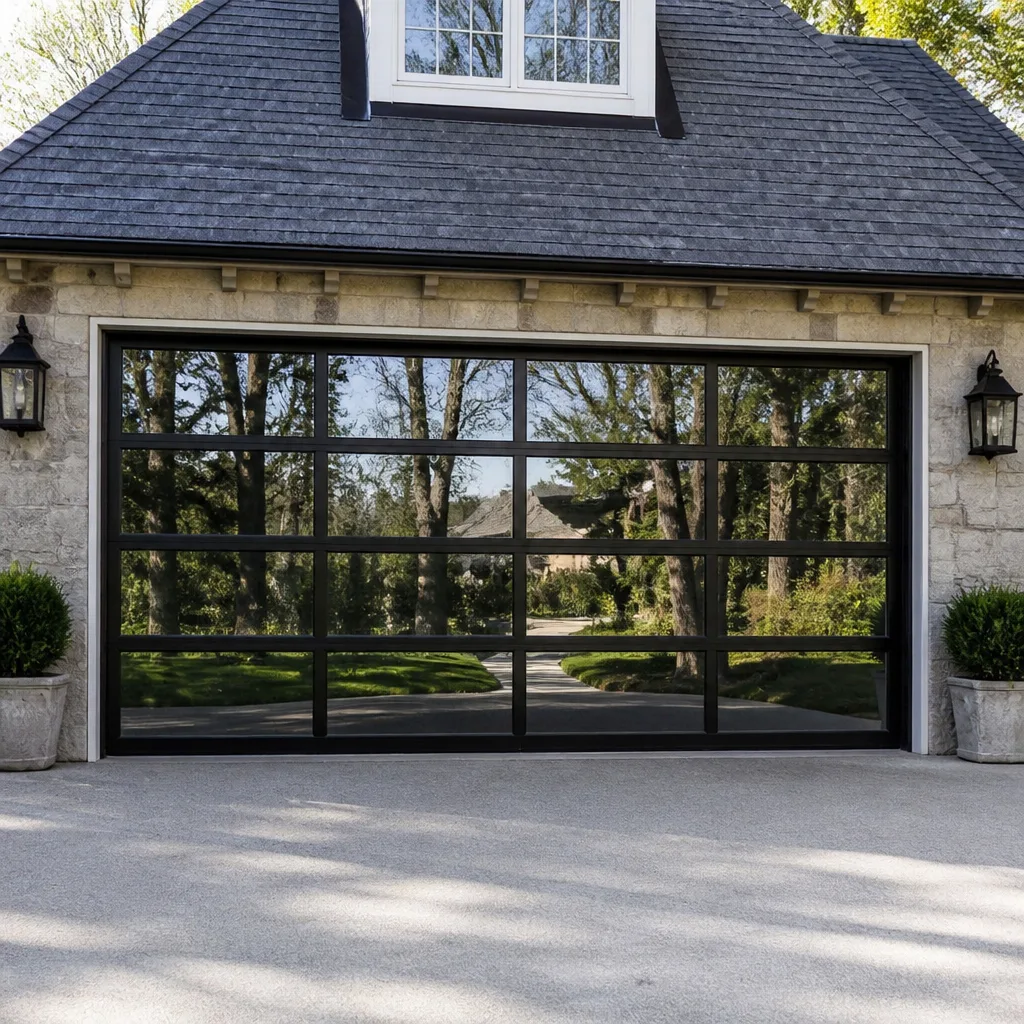 Full-view glass
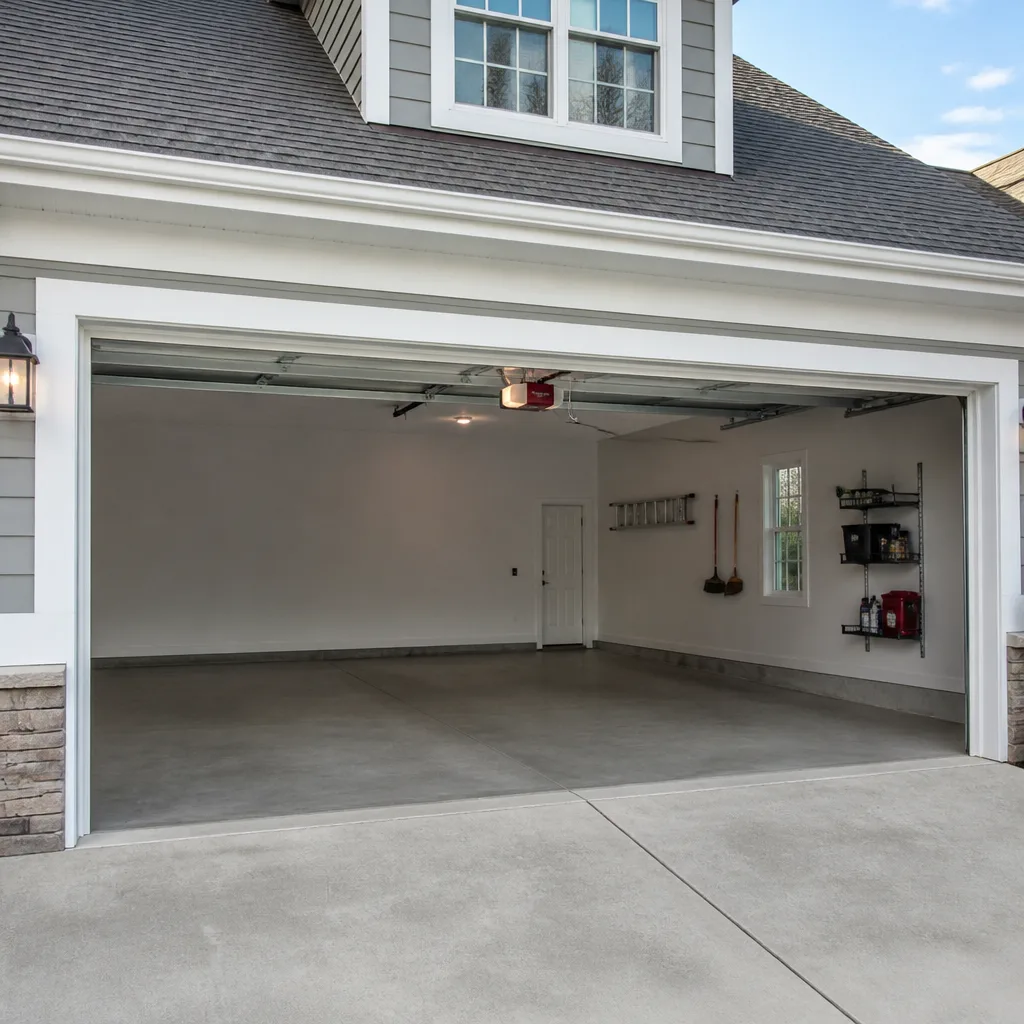 LiftMaster openers
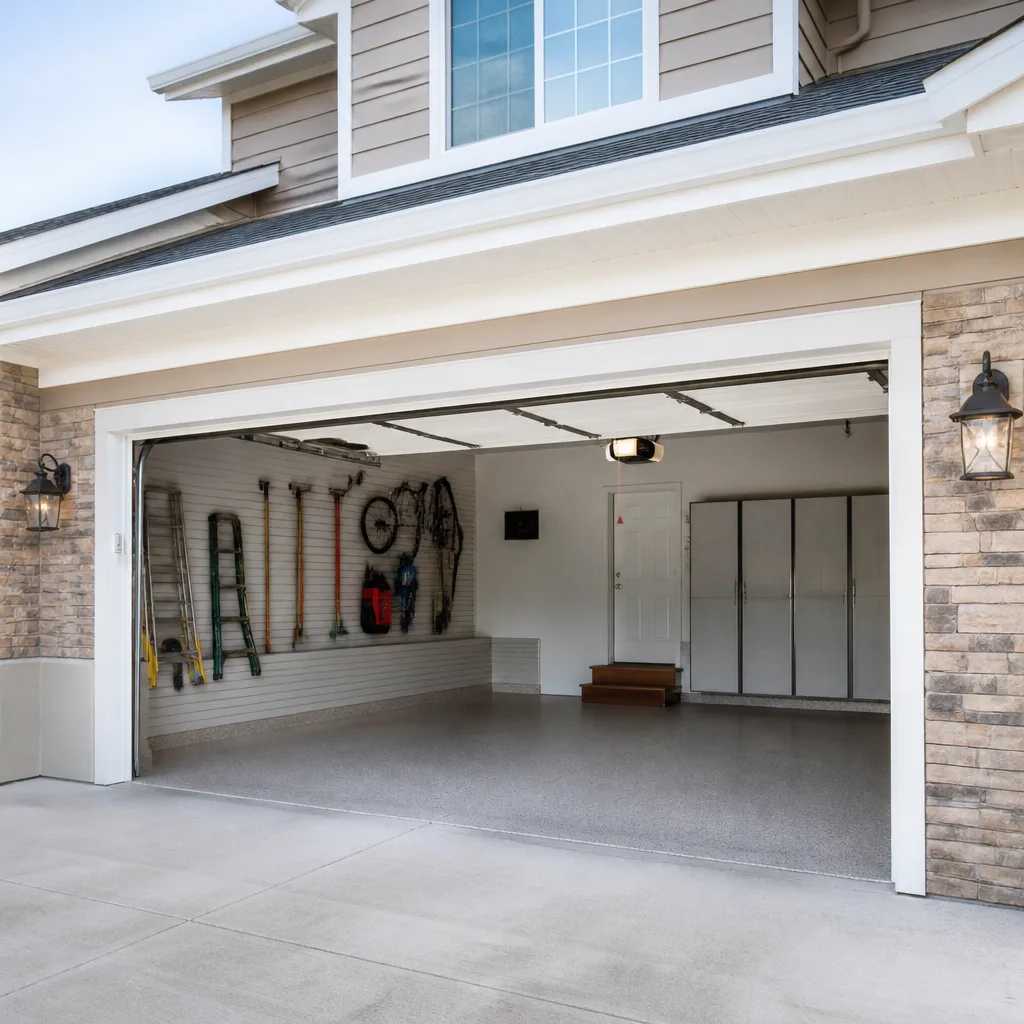 Chamberlain openers
Full 25-point door and opener safety check with every visit - springs, cables, rollers, tracks, and your LiftMaster or Chamberlain opener included
You get a price before we start. It does not change when the pro arrives.
Get your free estimateHow to Hire a Garage Door Contractor in Petersburg: A Step-by-Step Guide
The most expensive garage door repair mistake Petersburg homeowners make isn’t hiring someone unlicensed. It’s hiring a licensed general handyman who replaces parts by elimination instead of diagnosis, then bills labor for every wrong guess along the way. A spring gets swapped when the real problem is a bent track. An opener board gets replaced because the door won’t close, when the actual culprit is a photo-eye knocked out of alignment. Each visit looks reasonable on its own. Added together, they cost more than doing it right the first time. This guide walks you through the vetting questions that separate a garage door specialist from a competent generalist, how to read a quote line by line, and the red flags we see most often in the Petersburg market.
Quick Answer
To hire a garage door contractor in Petersburg, ask three questions before you book: what brands they work on, how they diagnose a door that reverses on its own, and whether their warranty covers parts, labor, or the repair itself. A specialist answers with a brand name and a diagnostic sequence. A generalist answers vaguely and shows up to guess. Get the price in writing before any work starts, and confirm the warranty covers the repair, not just the part.
Styles & brands we work with
- Raised-panel steel
- Carriage house
- Modern flush
- Full-view glass
- LiftMaster openers
- Chamberlain openers
Table of Contents
- Why a Garage Door Specialist Beats a General Handyman
- The Three Diagnostic Questions to Ask on the Phone
- What Virginia Licensing Covers for Garage Door Work
- How to Read a Garage Door Quote Line by Line
- Parts Warranty vs. Repair Warranty: The Only One That Protects You
- Petersburg-Specific Red Flags
- A Step-by-Step Hiring Checklist
- Why Spring Work Deserves Extra Scrutiny
Why a Garage Door Specialist Beats a General Handyman
A garage door is a weighted, tensioned, mechanically balanced system with more moving parts than most homeowners realize. It isn’t a wall or a window. Every component interacts with every other one: springs counterbalance the door’s weight, cables transfer the tension, rollers track the panels, and the opener provides lift and logic. When one part fails, the symptom rarely points cleanly to the cause. That’s exactly why a general handyman with good ratings can still misdiagnose a Chamberlain logic board as a spring issue, replace the spring, and hand you a bill that leaves you with the same problem two weeks later.
A specialist works differently. When we walk into a Petersburg garage and the homeowner says “it stopped opening,” the first thing we do is read the machine. Is the opener a modern LiftMaster with battery backup, an older Craftsman chain drive, or a Wayne Dalton with a proprietary spring system? The brand and model tell us how the system was engineered, which parts are likely to fail first, and what the diagnostic sequence should be. That’s not brand snobbery. It’s the difference between guessing and knowing.
Specialization also matters because garage door work spans a wide arc. A company that handles emergency repairs, component repairs, and full new installations in-house can follow the same door from failure through replacement. A general handyman can tighten a track. But when the door needs a new torsion system, a matched spring pair, or a complete Clopay or Amarr install, the generalist usually refers out, and the homeowner starts over with a second company. One call, full service sounds like a slogan until you’re the one making the second call.
Consider what a specialist actually carries into a Petersburg garage mentally: eight major brands of doors and openers, each with its own quirks. LiftMaster and Chamberlain share engineering DNA through the myQ smart-home ecosystem, but their logic boards and safety-reverse behaviors differ. Genie openers from different eras have different rail systems. Raynor commercial-grade doors show up in some local garages with spring configurations that confuse technicians trained only on residential Clopay. The list isn’t a brag. It’s the working knowledge a specialist brings to your specific door instead of a generic approach. If you want the full picture of what a proper garage door repair visit should include, that’s the standard to hold any contractor to.
The Three Diagnostic Questions to Ask on the Phone
You don’t need to know garage door repair to vet a contractor. You need three questions that take about ninety seconds to answer and reveal almost immediately whether you’re speaking with a specialist or a generalist. Ask them before you book. The right answers sound specific; the wrong ones sound like a customer service script.
- “What brands of garage doors and openers do you work on?” A specialist names brands without effort: LiftMaster, Chamberlain, Genie, Clopay, Amarr, Wayne Dalton, Craftsman, Raynor. They might ask which one you have in return because the answer changes how they prepare. A generalist says “all of them” or “we handle anything.” That’s not confidence. It’s a shrug.
- “My door reverses before it hits the floor. What would you check first?” A specialist walks through a diagnostic sequence: the safety photo-eyes first, then the close-force limit on the opener, then the track and roller condition, then the logic board if the first three check out. A generalist says “we’d have to come look at it,” which is fair for a complex repair but not for a symptom this common.
- “If you replace a part and the problem comes back, what does your warranty cover?” A specialist explains the difference between a manufacturer’s parts warranty and a warranty on their own repair work. A generalist either can’t answer or promises “we’ll take care of you” without specifying anything. Vague is expensive.
If the person on the phone can answer all three without hedging, you’re speaking with someone who does this work every day. If two out of three get deflected, keep calling. This one screen eliminates most of the misdiagnosis problem before it reaches your garage.
What Virginia Licensing Covers for Garage Door Work
Homeowners in Petersburg often assume that a contractor’s license means the state has verified they can do garage door work correctly. It doesn’t. Virginia’s contractor licensing system classifies work by trade and project value, and garage door repair generally falls under general contracting or specialty classifications depending on scope. The license confirms the contractor is registered, carries the required insurance, and can legally contract for the work. It says nothing about whether they’ve ever replaced a torsion spring, opened the logic board on a LiftMaster, or diagnosed a Raynor door’s counterbalance failure.
What the license does give you is recourse. If the work goes badly and the contractor is licensed and insured, you have a path through the state licensing board and their insurer. If they aren’t, you don’t. So licensing matters, but it’s a floor, not a ceiling. The technician standing in your garage needs to be both properly licensed through the company they work for and genuinely trained on the equipment they’re touching.
For spring work specifically, no Virginia license substitutes for training under tension. High-tension torsion and extension springs store enough energy to cause serious injury if handled without the right tools and the correct winding technique. A licensed generalist is still not qualified to wind a torsion spring just because they hold a contractor’s card. That’s a real distinction. Springs are dangerous, and this is a job for a trained technician. The local pro we connect you with is licensed and insured as their state requires; the licensing is a baseline, and the training on the specific hardware is what keeps the repair safe.
Ask any contractor you’re considering whether they work on springs in-house or outsource them. A specialist does the spring work themselves because they’ve invested in the tools and training. A generalist either avoids it or subcontracts it, which means the person who actually shows up may not be the company you called. If you want to understand what a proper garage door spring repair should look like, that’s the standard worth checking against.
How to Read a Garage Door Quote Line by Line
A quote from a garage door contractor should be readable in about two minutes by someone who doesn’t work in the trade. If it isn’t, that’s information. Here’s what a fair quote looks like, and what the questionable versions usually hide.
What should be itemized:
- Parts, listed by name, brand, and quantity (for example, “torsion spring, matched pair, one cycle update” rather than “spring repair”)
- Labor, stated as a set figure for the job, not an hourly rate with an open end
- Any additional hardware that requires replacement (rollers, drums, cables, hinges) shown as separate lines with a per-unit price
- The written price total, clearly marked, that will not change unless you authorize additional work
- A warranty description that covers the repair itself, not just the parts
What a bundled or vague line usually hides:
- A single “labor” line that could cover ten minutes or two hours, giving the technician room to expand the invoice once they arrive
- A “spring replacement” line without naming the spring count, weight, or brand, which makes it easy to install a lower-grade part than the one quoted
- An “opener tune-up” line without specifying what’s being checked, tested, or replaced
- Any mention of a diagnostic fee, trip charge, or service-call fee that wasn’t disclosed when you booked
The price cited in the written estimate is the price. If a contractor’s quote is vague and they say “we’ll figure out the price when we see it,” ask them to itemize before you authorize the visit. Any legitimate specialist can provide line-item pricing for the common repairs. And when you receive pricing for spring work, remember: a spring price is for one spring, and a matched pair costs roughly twice that, because the pair is usually replaced together. If a quote treats the pair price as a single-spring price, read it again before you sign.
Parts Warranty vs. Repair Warranty: The Only One That Protects You
Almost every garage door manufacturer’s warranty covers the part. Almost none of them cover the labor to diagnose and replace the part, and virtually none cover the possibility that the part was installed incorrectly or the wrong part was diagnosed in the first place. That’s why a manufacturer’s parts warranty, generous as it looks on paper, rarely covers the scenario that actually costs you money: the repair fails and the technician has to come back.
A warranty on the repair is different. It says that if the door reopens to the same symptom within the technician’s warranty window, the technician comes back and diagnoses it again at no charge, and if their repair was the cause, they fix it. That warranty is worth more than the parts coverage because it puts the diagnostic risk on the contractor instead of on you. If they misdiagnosed, they pay for the misdiagnosis. If they got it right, everyone moves on.
When you read a quote, look for the warranty language and confirm four things:
- What the warranty covers (parts, labor, or the repair itself)
- How long the warranty lasts from the date of the repair
- Whether the warranty is transferable if you sell the home
- Whether the warranty requires using the same company for repairs, or just covers you regardless
In Petersburg, where many homes have garages attached directly to living space and the door functions as a daily entry point, the repair warranty is the one that matters most. A door that fails again days after a repair isn’t just a hassle. It’s a door standing open that you’ll need to lock down before you leave the house. The repair warranty protects you from having to pay twice for the same problem.
Petersburg-Specific Red Flags
The garage door market in Petersburg has a few tendencies worth knowing about before you hire. None of them are unique to Petersburg, but they show up here in patterns worth naming.
- Out-of-area companies that surface after storm events. When a strong storm passes through and knocks down limbs or damages doors, contractors from well outside the area sometimes canvass neighborhoods. Doors that look damaged may only need a realignment. Ask for a local business address and a phone number you can call again after the work is done. If they can’t be found in six months, they aren’t the ones you want handling the repair.
- Drive-by spring pricing that changes on arrival. A quote given from the driveway, sight unseen, then “adjusted” once the technician is inside your garage, is a bait-and-switch pattern. Legitimate specialists quote from a written estimate after seeing the door or from detailed photographs, and they confirm the price in writing before starting.
- Bundle-priced spring jobs that never state the spring count. A torsion spring replacement is per spring, and a matched pair is usually done together. A vague “spring replacement” price leaves room to install one spring for the price of two, or two for the price of three. Insist on the count.
- “We’ll fix it today, and we’ll figure out the invoice after.” This pattern puts the diagnosis risk on you instead of on the contractor. A proper contractor diagnoses, quotes, and only then begins work. If they begin work first, keep the door closed and ask them to stop.
- Guarantees without specifics. “We guarantee the work” with no timeframe, no conditions, and no written coverage is not a warranty. Ask for it in writing.
- No brand names on the phone. If the person who answers can’t tell you what brands they work on, they may be dispatching from a call center and assigning the visit to the highest bidder that week.
If the local pro you connect with can’t answer these confidently, keep moving. The right specialist will.
A Step-by-Step Hiring Checklist
Here’s the sequence we’d recommend to any Petersburg homeowner hiring a garage door contractor. It works for emergency repairs, scheduled replacements, and everything in between.
- Identify the symptom and the brand. Before you call anyone, note what the door is doing (won’t open, won’t close, reverses, off track, loud noise, opener light blinking a code) and what brand the door and opener are. The label on the door’s bottom bracket or the opener’s head unit tells you the manufacturer. This one step makes every conversation you have more productive.
- Call two or three specialists and ask the three diagnostic questions. Listen for brand-specific answers and a diagnostic sequence. Cross off anyone who deflects.
- Ask what the visit will cost before you book. Any legitimate contractor quotes in writing before starting work. There should be no surprise fees on the invoice.
- Get the quote in writing, itemized. Parts, labor, warranty, and the total. If it’s vague, ask for a line-item version.
- Confirm the warranty covers the repair, not just the parts. Get the timeframe and conditions.
- Schedule the work with a specialist who diagnoses first, quotes second, then repairs. If the technician starts work without a written price, stop and ask for one.
- Keep the quote and warranty paperwork. If the door needs warranty service later, you’ll want both.
Notice what’s missing from this list: price shopping. That’s deliberate. Price matters, but price is the last question, not the first, because a cheap repair by a generalist who misdiagnoses will cost you more than a fair repair by a specialist who gets it right once. For the broader picture of what a proper repair visit involves, our guide to garage door repair covers the diagnosis flow from arrival to sign-off. If the issue is opener-specific, the garage door opener repair page walks through the brand-by-brand troubleshooting that specialists use. And if you’re hiring because you’re planning a full replacement rather than a repair, ask the contractor about their installation process and whether they handle the full removal, haul-away, and new-door setup themselves.
Why Spring Work Deserves Extra Scrutiny
Garage door spring repair is the single most dangerous job in the trade, and it’s also the one where the gap between a specialist and a generalist matters most. A broken torsion or extension spring leaves the door weighted far more than the opener is designed to lift. If the door is forced open, a panel can buckle or a cable can snap. If a technician without proper training tries to replace the spring, the stored energy can cause serious injury in an instant.
Springs are dangerous, and this is a job for a trained technician. That’s not a disclaimer. It’s the reality of the work. Here’s what to ask before any spring replacement:
- Do you do spring repair yourself, or do you subcontract it?
- Do you stock or source springs matched to my door’s weight and cycle rating?
- Is the spring replacement quoted per spring, and is the pair recommended together?
- What does the warranty cover on the spring and the installation?
- How do you test the door after installation to confirm the balance and safety-reverse are correct?
Our technicians have up to 8 years of experience, and the ones who handle spring work have dedicated that time specifically to high-tension systems. That’s the difference between a technician who has replaced hundreds of springs and one who has replaced a handful. When you’re vetting contractors for spring work, ask specifically how many they do per week and whether they’ll replace a single spring or push you toward a matched pair. A matched pair is usually the right call because both springs have cycled the same number of times, and replacing one leaves the other ready to fail next month. If a quote prices a pair like a single spring, that’s worth a second look. If a quote prices a single spring at full job cost with no mention of the pair, that’s worth a second look too.
For a deeper dive into what proper spring service involves, see our full guide to garage door spring repair. And if the door has already failed, don’t operate it manually to inspect it yourself. That’s the one scenario where we recommend a call rather than a look.
Common Mistakes to Avoid
- Hiring on price alone. The cheapest quote often comes from a generalist who plans to diagnose by elimination and bill you for each wrong guess. The price in the estimate is what you pay; the price on the invoice when they guess wrong is a different number entirely.
- Skipping the brand question. A contractor who can’t name the brands they work on hasn’t learned the hardware well enough to diagnose it. Ask before you book, and listen for specificity.
- Accepting a verbal price. Any legitimate contractor quotes in writing before starting work. A verbal price opens the door to an invoice larger than you expected, with no recourse.
- Assuming licensing equals competence. Virginia’s contractor license confirms registration and insurance, not garage door training. The technician’s specific experience with the brand on your door is what determines whether the repair holds.
- Ignoring the warranty language. Ask whether the warranty covers the repair itself, not just the parts. A parts warranty that excludes labor leaves you paying for the same visit twice.
- Booking spring work with anyone who treats it like any other repair. Springs are dangerous, and the training matters. Ask specifically whether the company does spring work in-house.
- Waiting for a scheduled appointment after a spring snaps or a door sticks open. A door standing open is a security exposure in Petersburg, and a door that won’t close can’t be left that way. Emergency service is what gets a failed door back on track the same day, not next week.
See the difference
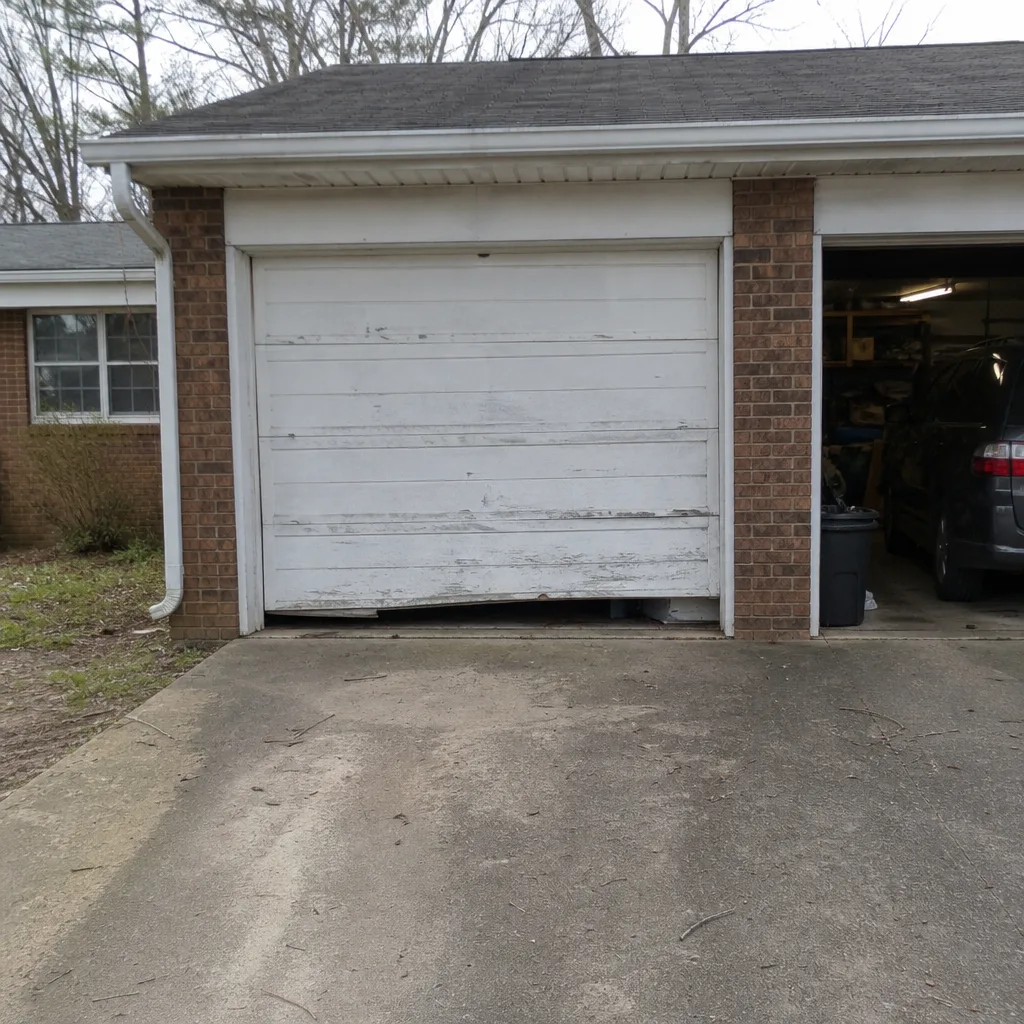 Before
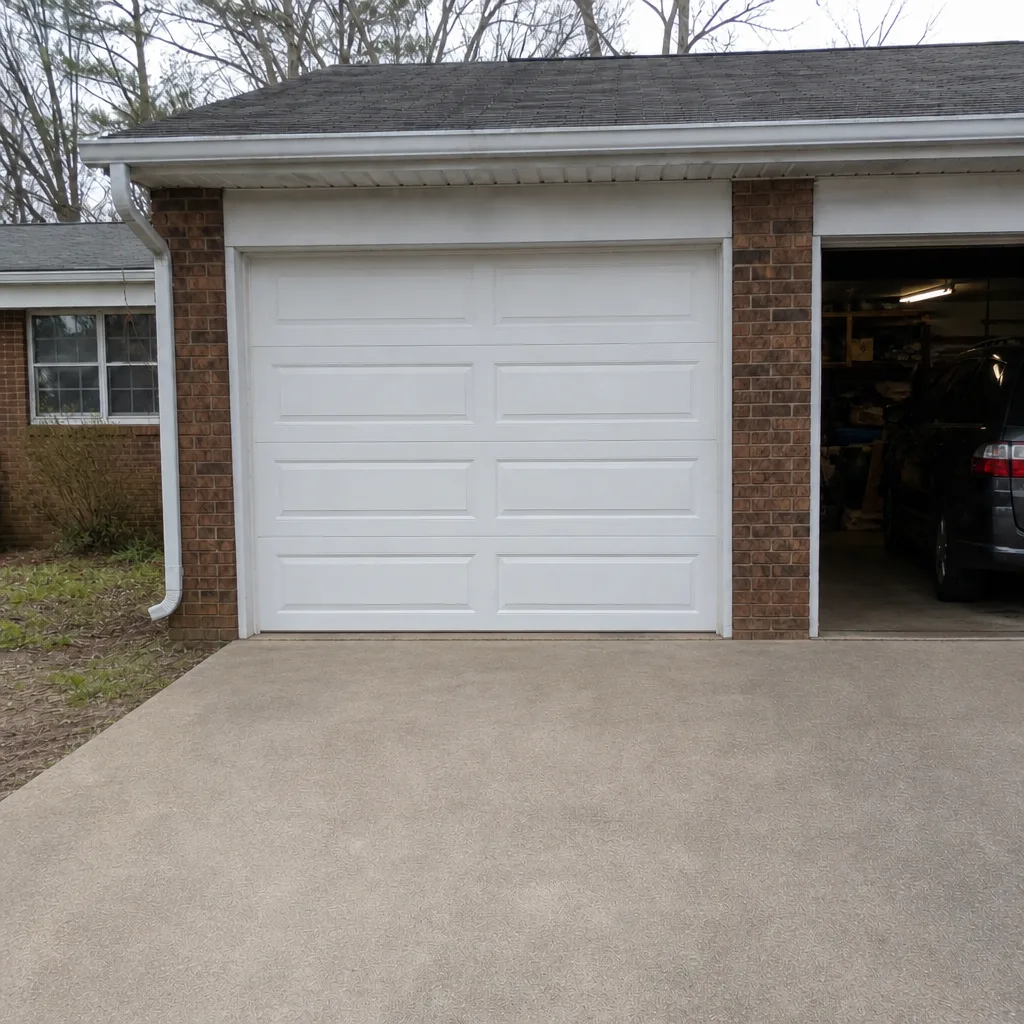 After
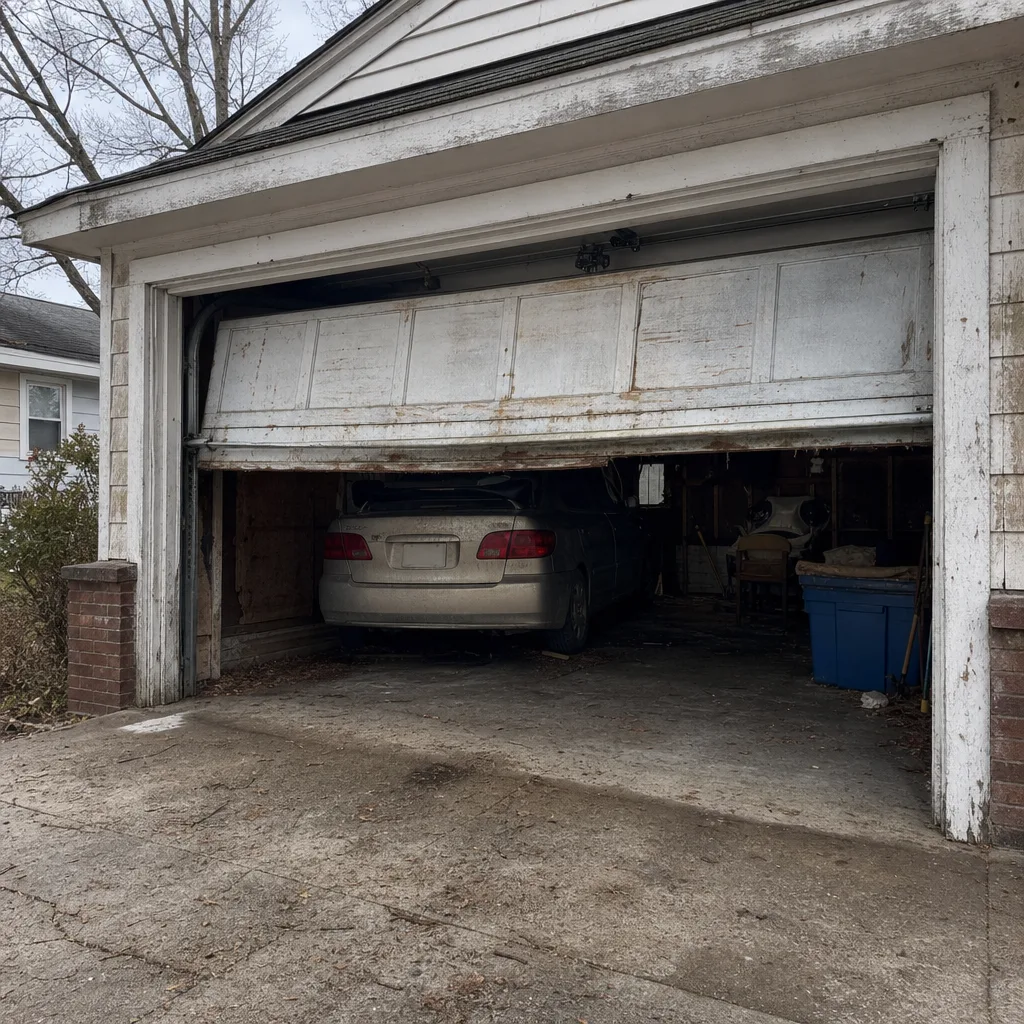 Before
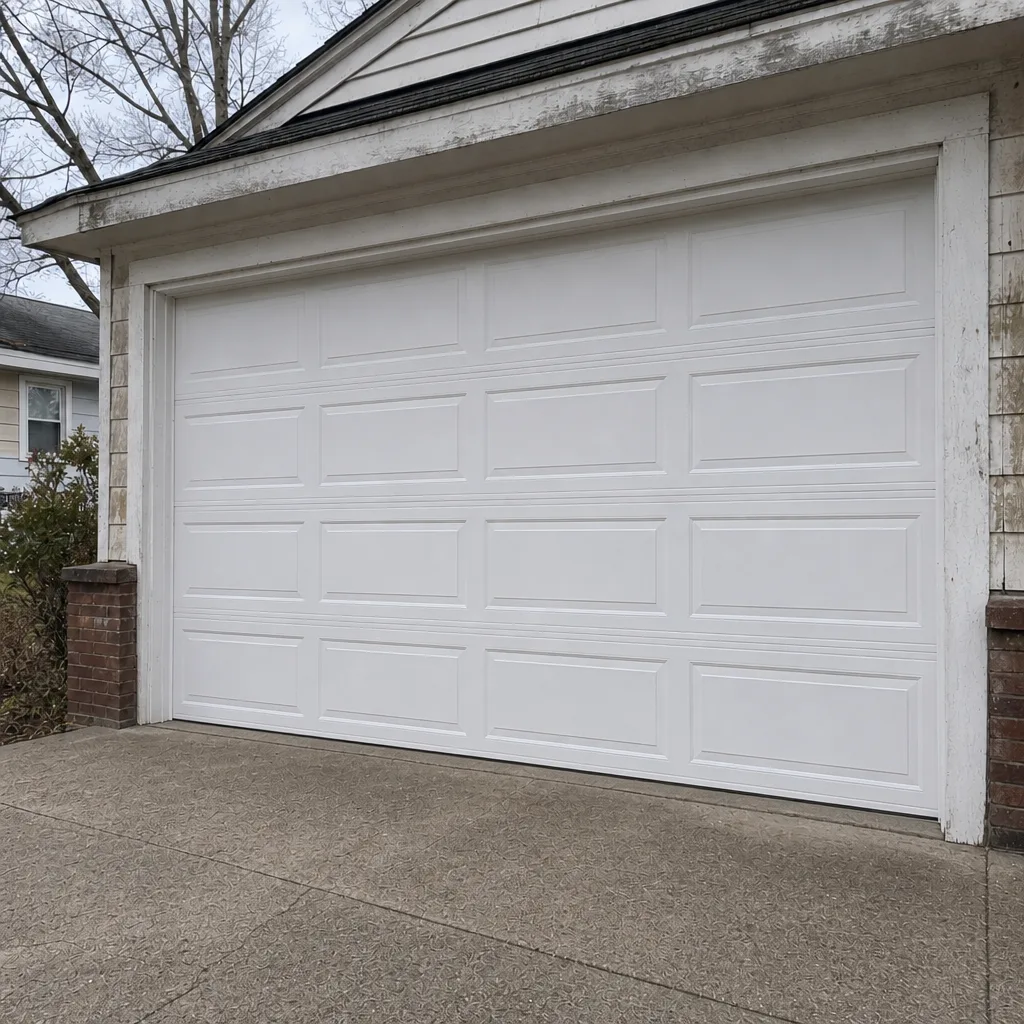 After
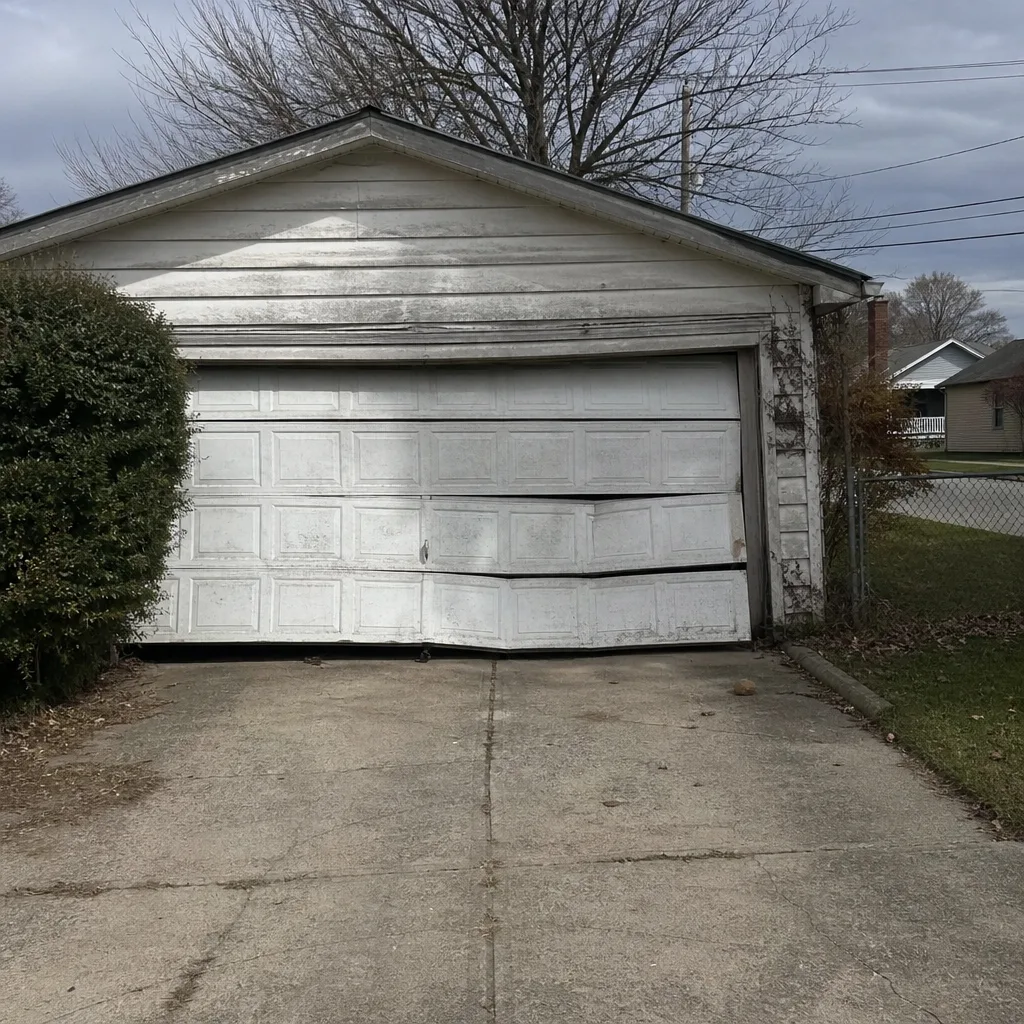 Before
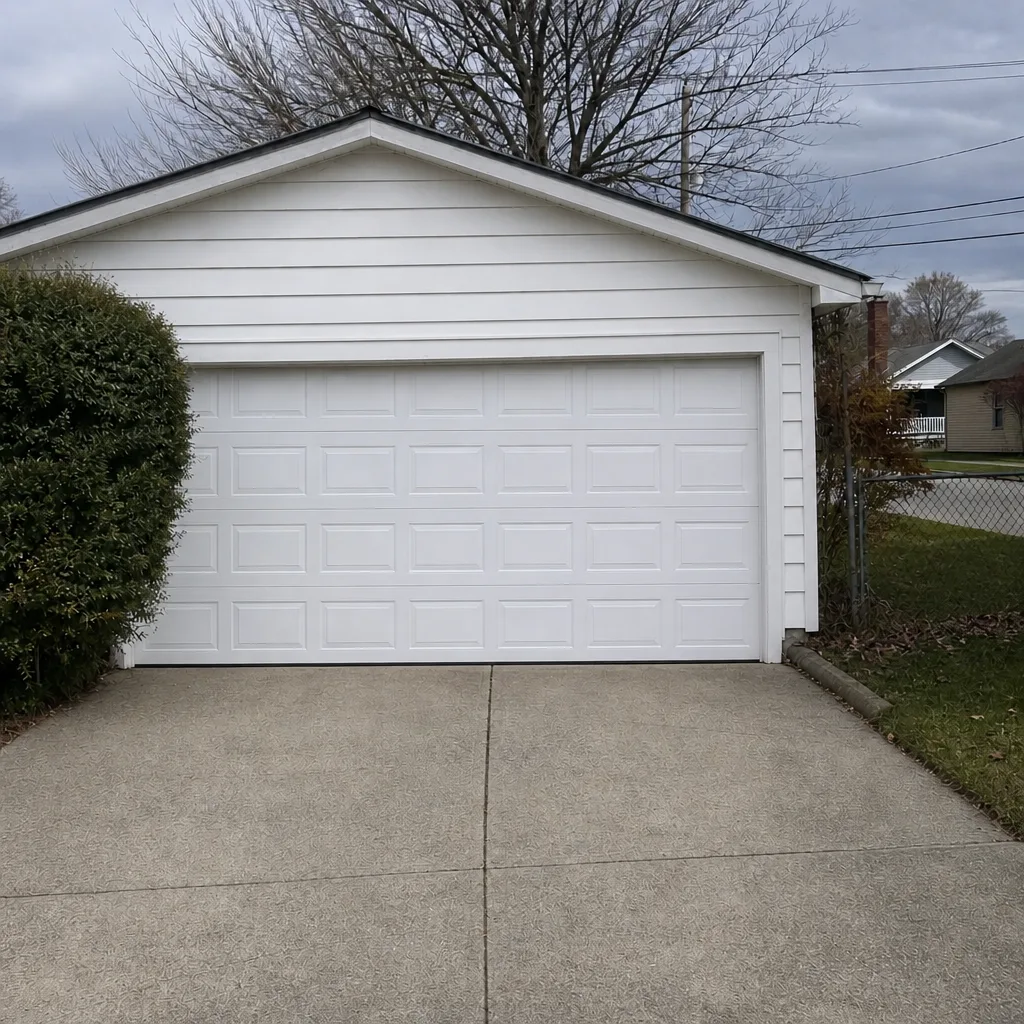 After
When to Call a Professional
Some garage door problems can be safely checked at home: a photo-eye that’s been bumped out of alignment, a remote with a dead battery, an opener that’s been tripped and just needs to be reset. Those are quick-check items. Everything past them is a call. Symptoms that warrant a professional visit right away include a snapped spring (visible as a gap in the torsion bar or a loose extension spring hanging on its cable), a door that’s off its track or visibly crooked, a door that closes and reopens several times in a row, a door that won’t open or close at all, an opener that runs but the door doesn’t move, a door that slams down hard or struggles to lift, and any loud cracking or popping sound from the spring assembly. Don’t lift or force the door in those scenarios. Petersburg Garage Door Repair Pros offers free estimates in Petersburg – call (844) 791-5308. We answer 24/7, and fast dispatch from 7am to 7pm, Sunday through Friday, means a failed door can usually be diagnosed and quoted the same day.
Frequently Asked Questions
Ask three questions: what brands they work on, how they diagnose a door that reverses before closing, and what their warranty covers. A specialist answers each with specifics (brand names, a diagnostic sequence, and a repair warranty, not just a parts warranty). A generalist deflects or answers vaguely. If the person on the phone can’t answer all three clearly, keep calling.
Repair pricing depends on the diagnosis, the parts required, and the brand of the door or opener, so there is no single number for Petersburg. The written estimate you receive after diagnosis is the price you pay, and it shouldn’t change once work begins. Ask for a line-item quote before authorizing any visit, and confirm whether the price includes parts, labor, and warranty. Call (844) 791-5308 for an exact quote; estimates are free.
For any job beyond minor adjustments, yes, you want a licensed and insured contractor. Virginia’s licensing confirms registration and insurance, which gives you recourse if something goes wrong. It does not confirm garage door training, so pair the licensing check with the three diagnostic questions. The local pro we connect you with is licensed and insured as their state requires.
Not if the diagnosis and written estimate happen before any work starts. A properly run job has three stages: diagnose, quote in writing, then repair only after you approve. Any contractor who begins work before quoting is putting the diagnostic risk on you. If they’ve quoted in writing and the scope doesn’t change, the written estimate is the price.
The local pro we connect you with is licensed and insured as their state requires. Our technicians have up to 8 years of experience, with brand-specific training across the eight major door and opener brands. If you’re hiring a contractor independently, ask for the company’s insurance certificate before booking, and confirm the individual expected on-site is trained on your specific brand.
For urgent repairs, frequently yes. Emergency garage door service is a core offering, not an upcharge. Call (844) 791-5308. We answer 24/7, and fast dispatch from 7am to 7pm, Sunday through Friday, means we can usually get to a failed door the same day. A call outside dispatch hours is booked into the next opening, Sunday through Friday, 7am to 7pm.
Emergency repairs address a door that’s failed and needs to be made safe and secure right away. Scheduled installations are planned replacement work that requires measurement, ordering, and a scheduled install day. If your door has failed, call. If you’re planning a replacement, ask for a free measure and a written price rather than an emergency visit. For the broader picture on planned work, see Petersburg Garage Door Repair Pros.
The Bottom Line
Hiring the right garage door contractor in Petersburg comes down to one question that most guides skip: does this contractor know your hardware before they arrive? A generalist with good reviews can still misdiagnose a Chamberlain logic board as a spring issue. A specialist reads the brand and model, diagnoses by what the machine actually does, quotes in writing, and warrants the repair, not just the part. Ask the three diagnostic questions, read the quote line by line, confirm the spring count on any pair pricing, and hold the contractor to a written estimate before they touch the door. That’s the sequence that protects you from the wrong guess.
If you’d rather skip the vetting and go straight to a specialist, call Petersburg Garage Door Repair Pros at (844) 791-5308 for a free estimate. We work on your brand, we handle spring repair and opener repair in-house, and we treat emergency calls as the front line of the work, not an upsell.
What Happens When You Call
When you call Petersburg Garage Door Repair Pros, the first thing we do is ask about the door: the brand, the symptom, what the opener is doing, and what you’ve already tried. That conversation is the beginning of the diagnosis. From there we book a visit, and when the technician arrives, they diagnose before quoting. You get a written estimate before any work starts, and the price in the estimate is the price on the invoice. If the diagnosis changes, we tell you before anything gets replaced. That’s the standard: diagnose, quote, then repair.
Whether you’re hiring us or vetting another contractor, the checklist above is the same. If the Petersburg specialist you called can’t answer the three diagnostic questions or can’t put the price in writing before starting work, keep calling. The right contractor is the one who treats your garage door like a specific machine with a specific brand and a specific failure pattern, not a generic service call on a schedule. Emergency? We’re the call. Call (844) 791-5308. We answer 24/7. Fast dispatch from 7am to 7pm, Sunday through Friday.
Written by the team at Petersburg Garage Door Repair Pros.